
A Tale of Two Basins
Why the Gulf Arab states built empires while the Niger Delta inherited ruin — and which of those choices can still be made here.
Both regions sit on top of enormous hydrocarbon deposits. One converted that inheritance into sovereign wealth funds, technical universities, world-class ports and a post-oil investment strategy. The other converted it into flare stacks over fishing creeks, a compensation regime that pays for cassava stems but not for a dead estuary, and a generation of young people who watch the wealth of their own ground travel past them in a pipeline.
The gap between the Gulf Cooperation Council and the Niger Delta is not a story about geology. Both basins produce a light, low-sulphur, highly marketable crude. It is a story about the architecture built on top of the geology: who owns the resource, who operates it, who bears the environmental cost, and who is legally entitled to a share of the rent.
This viewpoint sets the two systems side by side across seven dimensions — statute, ecology, benefit-sharing, security, human capital, sovereign savings and operator efficiency — not to romanticise the Gulf monarchies, which carry their own well-documented governance and labour critiques, but to isolate the specific design choices that are reproducible here.
$2.35T+
GCC sovereign wealth
ADIA (~$950B), PIF (~$900B) and QIA (~$500B) combined, by published 2024–25 estimates.
~$3B
Nigeria's NSIA
Established 2011. Assets remain a rounding error beside a single Gulf fund, for a population of 230 million.
3%
PIA host community share
Of operator OPEX — not revenue, not profit. HOSTCOM and civil society have asked for 6%.
52.68%
Federal share of FAAC
Revenue pooled centrally; states and local councils divide the rest, plus 13% derivation to producing states.
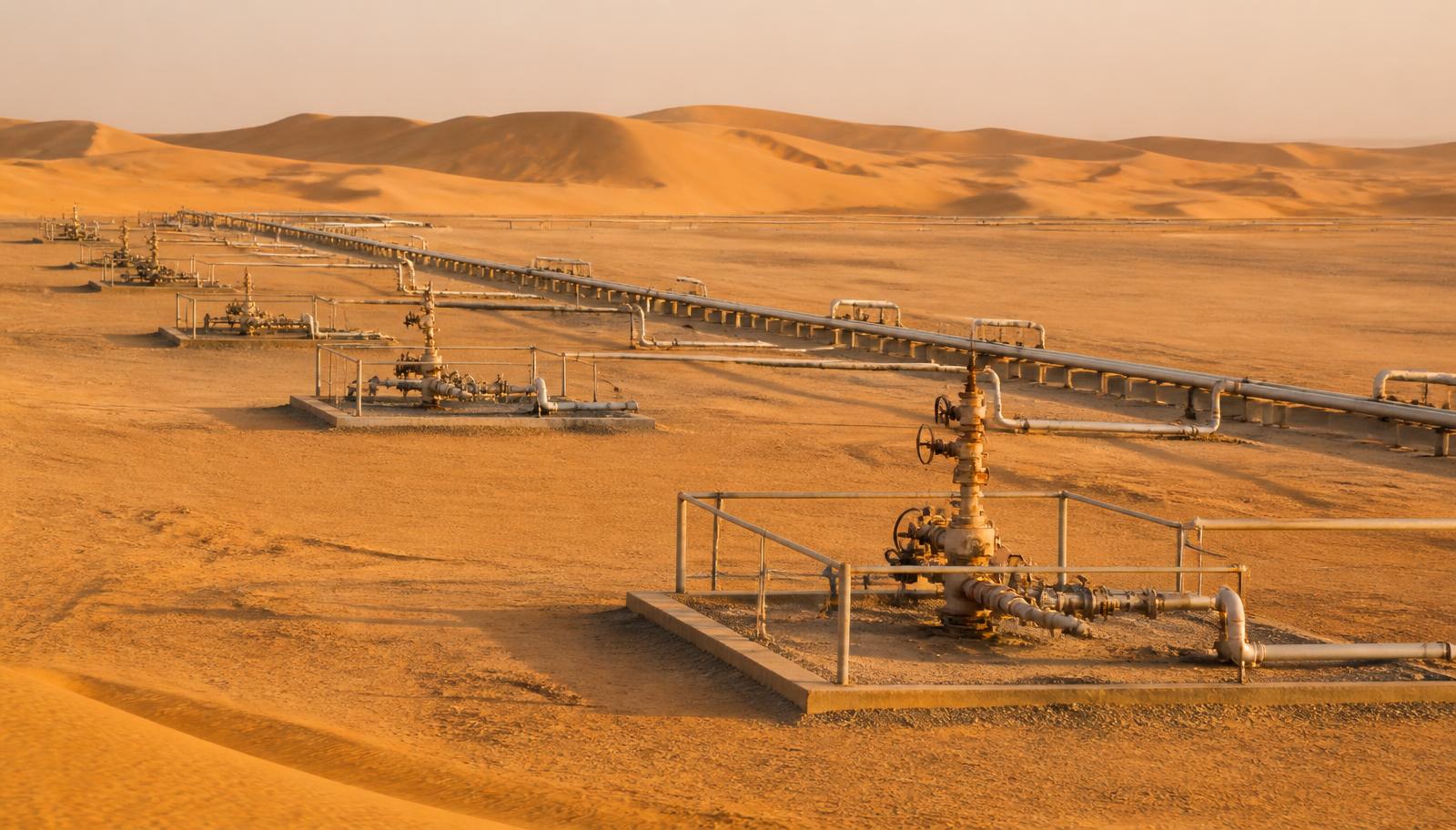 Gulf
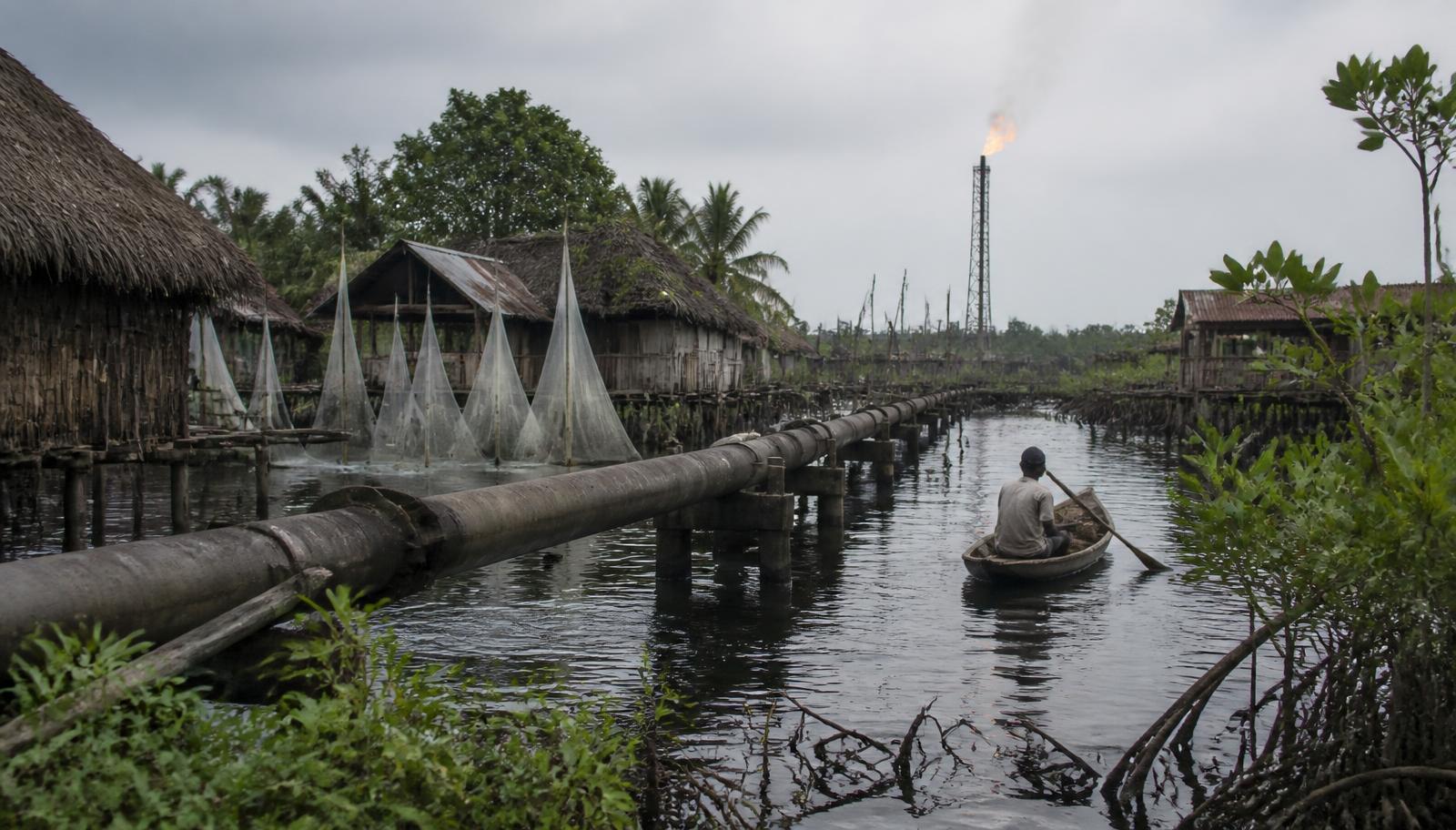 Niger Delta
Interactive
Seven dimensions, side by side
Choose a dimension to compare how each basin answered the same structural question. Use the toggle to read one column at a time on a small screen.
Statute & sovereignty
Who legally owns what lies beneath the ground?
Gulf Cooperation Council
Sovereign ownership, sovereign operation
Royal decrees and national petroleum codes declare hydrocarbons the exclusive property of the state, and the national oil company operates as the sovereign's commercial arm. Between 1973 and 1980 Saudi Arabia moved from a 25% stake in Aramco to full ownership; ADNOC and QatarEnergy followed comparable equity buyout paths. The consequence is simple: 100% of net rent lands in national accounts, with no matching-cost obligation to a foreign partner.
Niger Delta
Federal title, joint-venture liability
Section 44(3) of the 1999 Constitution vests all mineral oil and natural gas in the Federal Government; the Land Use Act 1978 vests land in state governors, so oil-bearing land can be acquired without community consent. Nigeria never nationalised upstream: NNPC held 55–60% in joint ventures with Shell, Chevron and others, which obliged the state to pay its matching share of costs. Decades of cash-call default produced deferred maintenance, underinvestment and arrears measured in billions.
What is reproducible here
Equity without the ability to fund it is not control — it is a liability with a shareholding attached. Ownership reform must be paired with a financing model that does not depend on annual budget appropriation.

The savings gap, to scale
Approximate assets under management, US$ billions, on published 2024–25 estimates. The bar for Nigeria's NSIA is not a formatting error.
Where a Nigerian barrel's rent goes
FAAC pools revenue centrally and distributes it by formula. Producing states receive an additional 13% derivation — paid into state capitals, not into host communities.
The host community's own statutory entitlement sits outside this chart entirely: 3% of operator operating expenditure, under the PIA 2021.
What it costs to lift a barrel
Indicative ranges, US$ per barrel. Security, ageing infrastructure and theft sit inside the Niger Delta onshore figure — costs that are deducted before any rent is shared.
Every avoidable dollar of lifting cost is a dollar that never reaches the treasury, the derivation pool or the host community trust.
The moment the paths split
Both basins started the twentieth century under near-identical concession terms. The 1970s is where the two stories stop rhyming.
1938
Gulf
Concessions across the Gulf held by Western majors on lopsided terms.
Niger Delta
Shell D'Arcy receives an exploration licence covering effectively all of Nigeria.
1969–1971
Gulf
OPEC participation talks begin; states press for equity in operating companies.
Niger Delta
Petroleum Act vests the entire property in and control of all petroleum in the Federation.
1973–1980
Gulf
Saudi Arabia moves from a 25% Aramco stake to 100% ownership; ADNOC and QatarEnergy consolidate.
Niger Delta
Nigeria takes majority JV equity but not operatorship — and inherits the cash-call obligation.
1978
Gulf
Rent flows directly to sovereign treasuries and early development funds.
Niger Delta
Land Use Act vests land in state governors; oil operations become an overriding public interest.
1976–2011
Gulf
ADIA (1976), KIA expansion, QIA (2005) build permanent sovereign capital.
Niger Delta
NSIA created in 2011, three and a half decades later, and thinly capitalised.
2021–2025
Gulf
Vision 2030 diversification; non-oil sectors exceed 70% of UAE GDP.
Niger Delta
PIA 2021 introduces 3% HCDTs; IOCs divest onshore to Nigerian-owned operators.
Strategic takeaway
Six reproducible choices
The poverty of the Niger Delta is not an inevitable consequence of holding crude. It is the accumulated result of specific, documented, amendable policy decisions. These six are the shortest route from the comparison above to a different outcome.
01
Constitutional fiscal federalism
Amend s.44(3) and the derivation formula so producing communities hold a defined, justiciable interest — not a discretionary allocation routed through state capitals.
02
From 3% to 6%, on audited OPEX
Raise the HCDT contribution and require settlors to publish asset-level operating expenditure so trusts can verify what they are owed.
03
Delete the sabotage deduction
Repeal PIA s.257(2). Collective punishment of a whole trust area for third-party acts destroys the legitimacy the trust was created to build.
04
Direct equity for host assets
Reserve a carried, non-diluting community equity tranche in every onshore divestment, held by an incorporated trust with elected and professional trustees.
05
Escrowed remediation liability
Bond decommissioning and legacy pollution before licence transfer, so the handover to Nigerian operators does not extinguish the outgoing operator's cleanup obligation.
06
A Delta Restoration & Futures Fund
An automatic above-benchmark revenue sweep into a professionally managed fund with community trustees, published quarterly, mandated to build the post-oil regional economy.
From analysis to action
Turn the comparison into a demand
Sign the Land Use Act amendment petition, read the underlying statutes and evidence, and follow the chain of title from the 1938 concession to the 2025 onshore handover.
Sources and figures: Constitution of the Federal Republic of Nigeria 1999 (s.44(3)); Land Use Act 1978; Petroleum Act 1969; Petroleum Industry Act 2021 (Chapter 3, incl. s.257); NOGICD Act 2010; UNEP Environmental Assessment of Ogoniland (2011); NUPRC and NMDPRA public statements on HCDT incorporation; FAAC vertical allocation formula; published sovereign wealth fund asset estimates for ADIA, PIF, QIA, KIA and NSIA (2024–25). Lifting-cost figures are indicative industry ranges, not audited operator disclosures.