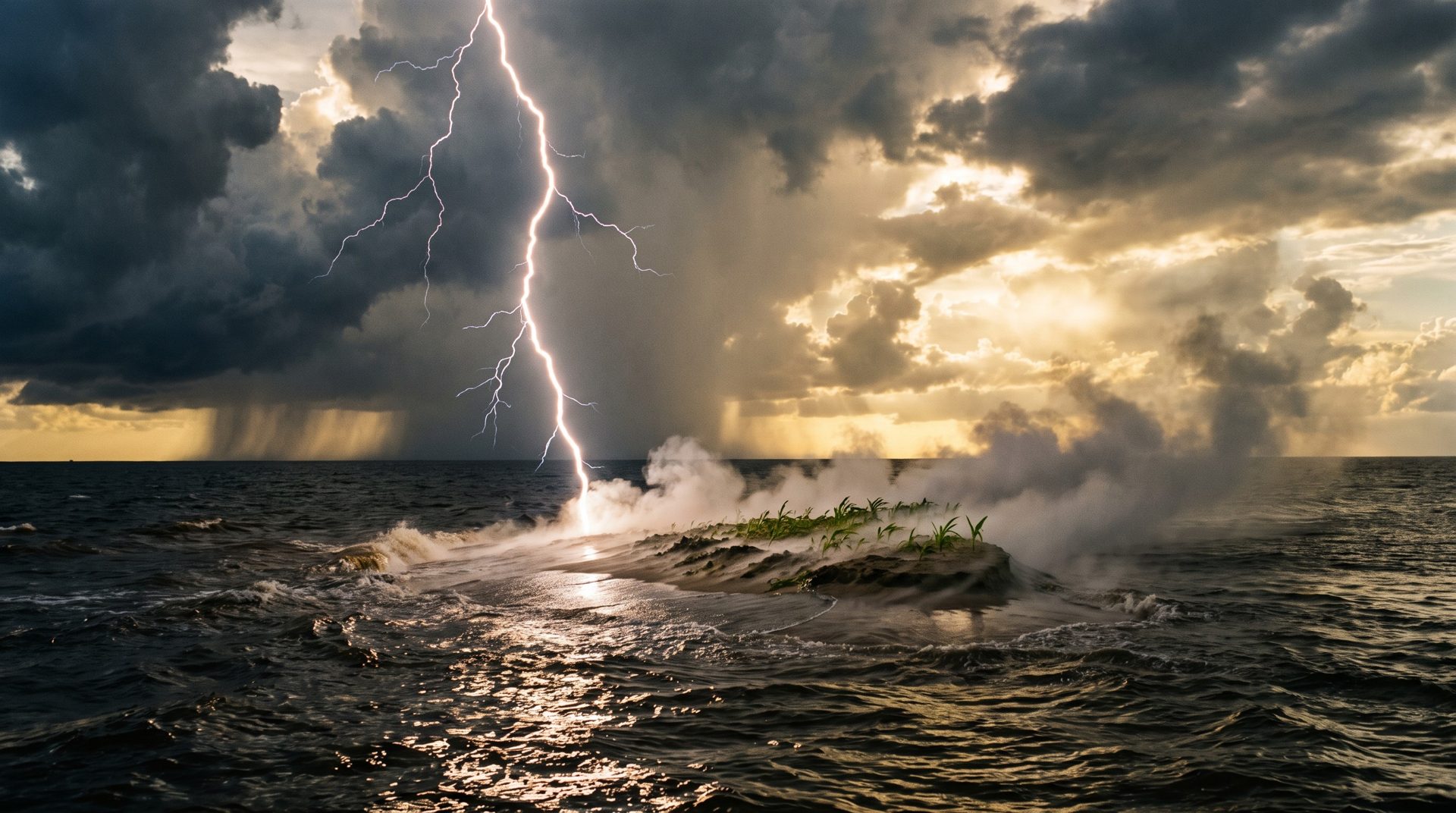
The World of Spirits
A field guide to the Ijaw pantheon
A creator named only as Our Mother, a destiny you spoke before you were born and cannot remember, and three kinds of spirit who run the delta on her behalf.
Before you were born you stood in front of a woman at a table and told her what your life would be. How long it would run. Whether you would be rich. How many children. What would kill you in the end. Then you walked down to one of two streams and were carried into the world, and you forgot every word of it.
That is the Ijaw account of a person, and everything else in this article hangs off it. The woman is Woyengi, Our Mother, the creator whom the Ijaw name only in the feminine. What you said in front of her is your so, your destiny, and the Kalabari call it the fixed point in all your dealings with her. The rest of the spirit world exists in the space between that fixed point and the life you are actually living.
This is a field guide to that world: the two words the Ijaw use to divide up everything that exists, the names of the Mother, the three kinds of free spirit that run the delta on her behalf, the named gods of each city-state, the society that dances the water people back into town, and the dead who expect to be fed. It is also a correction. A great deal of what now circulates online as the Ijaw pantheon is invented, or borrowed from the Igbo and relabelled. Every claim here carries a tag saying how well it stands up.
Temearau, Tamuno, Ayebaarau, Woyingi and Oginarau: five names, five aspects, one creator, and no image of her anywhere.
Heroes who founded the town, water people who never lived with us, and the lineage's own dead.
The water spirits are sent home roughly once a generation, when the town's stock of masquerades is spent.
Words circulating as Ijaw religious vocabulary that we could not attest, or that turn out to be Igbo.
Two words for everything
Before any god has a name, Ijaw thought splits the whole of existence in two. Click the diagram to move through the layers.
What can be seen, touched and heard. A body is confined to one place at one time. Everything material belongs here, and so does every person's visible half.
What cannot be seen, touched or heard, and is known only by its effects. Robin Horton's Kalabari informants were precise about the difference that matters most: spirits can be in two places at the same time.
The water all around
The owu own the creeks and everything in them. They never lived among people, and they alone have bodies as well as spirits, so they can be met in the mangrove.
- 1Tomi kiriThe place of peopleThe visible world of towns, creeks, canoes and markets.
- 2TemeThe realm of spiritsThe dead, the founding heroes and the water people. Not a distant heaven: it presses against the town on every side.
- 3A person's own tamunoThe personal creatorEach individual has their own tamuno, the creative force that made them and can still be reached.
- 4TamunoThe maker of the universeThe supreme being, at the top of the scheme and furthest from daily affairs.
Our Mother
Five names for one creator, and every one of them feminine — four of them well recorded, and one we have to flag. Select a name to see what it carries.
Woyingi · Oyin
DocumentedOur Mother
Central and western Izon
The most widely known name, and the plainest. Reported everywhere as wo, 'our', plus yingi, 'mother', though we could not find a linguist who has formally decomposed it.
The point is not that one god happens to be female. It is that the entire vocabulary is. In an inaugural lecture at Ambrose Alli University in 2004, Ajueyitsi Christopher Dime called the Ijaw the classical example of the feminine concept of God in Africa, a people who speak of God strictly in feminine terms, whose every name and attribute for God is feminine and applies to her alone.
She is also, deliberately, out of reach. No image of her is made. No shrine houses her. No daily sacrifice is offered to her. Among the Kalabari she is understood as a dual force: tamuno, the female creative modality concerned with creation, existence and destruction, and so, the directive modality concerned with destiny. Every person carries a small copy of the first, a tamuno of their own. The second is what you spoke at the table.
The choice before birth
Answer as the newly moulded would answer, in the order Gabriel Okara recorded. Then see what the Ijaw say you have just done.
Will you be a man or a woman?
In Okara's telling, Woyengi moulds each figure from the earth on the table before her, embraces it, breathes into it, and then asks. The figure answers for itself.
This is not a folk tale attached loosely to a religion. It is the religion's account of why anything happens to anybody. Misfortune is read as a destiny badly chosen in a room nobody remembers, which is why the remedy is not repentance but renegotiation, and why the diviner rather than the priest is the person you go to see. A whole house can do it as well as a person: a lineage has its own destiny, and its own capacity to recant.
Robin Horton set this Kalabari doctrine beside the Yoruba idea of ori and the Tallensi material in an essay published with Meyer Fortes in 1983. Its nearest neighbour in the Ijaw world is Egbesu, whose law also reaches inside the person and asks what they intend, and whose protection also lapses the moment the inside stops matching the outside.
Three kinds, sorted by where they live
Ijaw cosmology ranks beings by domain and by what they are made of, not by who their parents were.
Owu · Owuamapu
The water peopleThe owu never lived with people at all. They own the creeks, the fish and the tides. Alone among the three classes they have both body and spirit, so an ordinary person may see, hear and smell them in the mangrove forest. Horton called them the forces underpinning all that lies beyond the confines of the established social order: the source of genius and of madness alike.
Nimi Wariboko argues that the Kalabari idea of perfection is the collage, the composite, the blend. That principle explains the ranking. The water people mix the attributes of the other two classes, carrying body as well as spirit, and a being that mixes is a being that can do more. The same logic runs through the supreme being, who is herself a composite of a creative force and a directing one.
The named gods
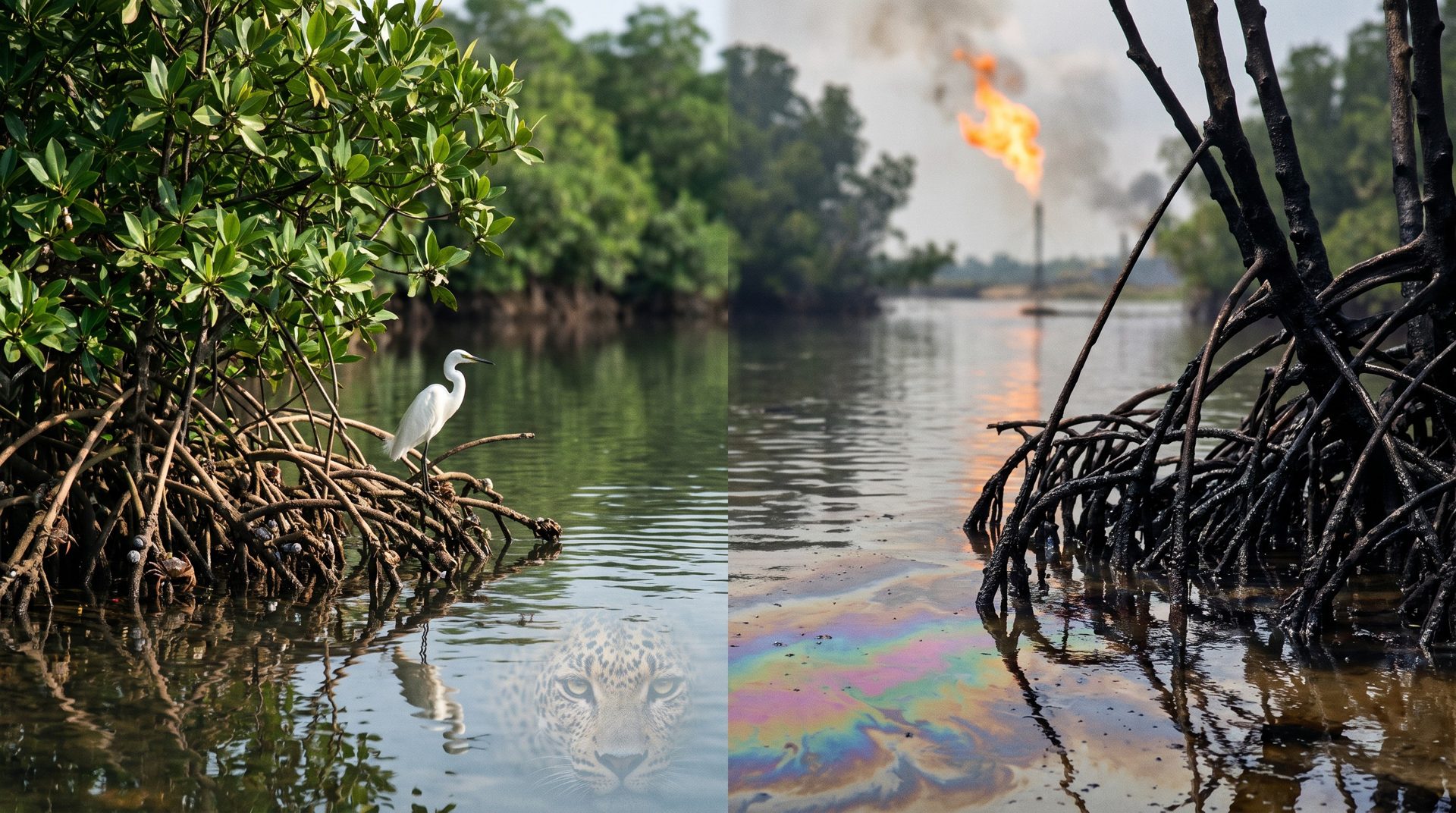
There is no single Ijaw pantheon. Each clan and city-state has its own, and a god who rules one town may be unknown in the next. Filter by community.
Egbesu
Central and western Ijaw
Justice, defence, moral order
Totem: Leopard
The arch-divinity of justice, treated at length in our companion article. Force under Egbesu is lawful only in defence or to correct a wrong, and only for those who are clean. Its most public shrine today is the Gbaraun Egbesu temple at Oporoza in Gbaramatu.
Owamekaso
Kalabari
Peace and trade; head of the oru
Also written Awoamenakaso and Akaso. Wariboko names her as the head of all the oru, the founding heroes. She is the goddess of a trading city rather than a fighting one: opposed to bloodshed, associated with the prosperity of New Calabar. Her praise-song describes a magical cloth patterned with the images of the oru nama, the sacred variegated animals.
Okpolodo
Kalabari
War
The Kalabari kept a war god alongside their goddess of peace, and a military institution called Periogbo. Peace in a trading state was guaranteed by the means of war, held in reserve.
Ogidiga
Nembe
The national god of the Nembe city-state
Totem: Royal python
Nembe tradition holds that Ogidiga arrived with migrants remembered as the Iselema, led by Alepe, and grew from a war god into the deity that bound the city-state together. Shrines stood at Oruamabiri and at Sikaka-polo in Bassambiri.
Ikuba
Bonny (Ibani)
War and the protection of the kingdom
Totem: Monitor lizard
The national deity of Bonny, with a shrine known as Ikuba Nungo in the heart of the town. Its end is unusually well dated: in 1867 King George Pepple, a Christian convert, had the cult publicly denounced and the sacred lizards killed, one of the sharpest single moments of religious change in the delta.
Fenibeso
Okrika (Kirike)
War, and the national god
Remembered as a warrior who came from Andoni country and rose to lead Okrika, venerated after death as its national deity. Tasie and Olumati record that he manifested through thunder and lightning to act. His shrine was the most sacred in Okrika. In 1915 the senior women of Okrika, whom Talbot called the women historians, ordered the men to sacrifice to Fenibeso in the course of resisting colonial agents.
Okuna
Okrika (Kirike)
Fire, and the enforcement of morals
Tasie and Olumati record that Okuna's functions included enforcing moral probity and taking part in war against the enemies of Okrika by setting their houses ablaze.
Adumu
Kalabari
Chief of the water spirits
Totem: Python
The head of the owu, himself in python form, and named as their chief among the Nembe as well as the Kalabari. Pythons are held to carry the spirits of his sons: they are never killed, they bless the house they enter, and they are buried with the honours of a chief. At his shrine the priestesses were diviners who could not take human husbands, because their husband was the serpent.
Duminea
Soku
The creeks and rivers of one village
A water spirit of a single village, and the best filmed deity in the delta: Robin Horton and Frank Speed recorded its festival at Soku in 1966, and the film is held by the Royal Anthropological Institute and the Smithsonian. Duminea is a reminder that most Ijaw gods are local before they are anything else.
Ekineba
Kalabari
Patron of the masquerade
A woman taken by the water spirits, who taught her their dances. She came back and taught them to her people, on the condition that she must always beat the drum first. The young men broke the rule three times, and the spirits took her back for good. She became the patron of the society that dances what she brought.
Alagba
Kalabari
The masquerade that opens the season
A female water spirit, and the only masquerade permitted to wear a leopard-skin cape. Nothing else may dance until Alagba has completed her circuit.
Otobo
Kalabari
The hippopotamus of the river
Totem: Hippopotamus
One of the great water-spirit masquerades, part man and part hippo. Crests of this kind, labelled bini oru, water spirit, are held by the Metropolitan Museum of Art.
Oru ogolo
Central Ijo
The bird that speaks the language of the spirits
The bulbul, a talkative bird, understood as speaking the spirits' own language. Recorded by Martha Anderson and Philip Peek in Ways of the Rivers.
Benikurukuru
Central Ijo
Named among the titular divinities of an ancient city
Appears in community tradition in a list of divinities said to have been carried by founding ancestors, alongside Suo-Egbesu, Adumu, Opu-Ogula, Oborowei and Dirimogbia. We found no scholarly attestation for it, or for the Agadagba-bou origin narrative itself, and we print it as what it is: tradition, held by the people who hold it.
Oru nama: the patterned animals
Certain reptiles and amphibians are sacred because of how they look. Their elaborately marked, multicoloured skins mark them out as uncanny, belonging to the spirits rather than to the ordinary world, and Kalabari carvers cut those same patterns into sculpture to give it power.
The dancing people
How a Kalabari town brings the water spirits ashore, entertains them for a generation, and then sends them home.
Among the Kalabari the water-spirit cult is run by the Ekine society, also called Sekiapu, the dancing people. Robin Horton's 1963 essay called it a borderland of religion and art, and it is more than both: for much of Kalabari history it was also an organ of government and of law. Only men wear the masks, in an institution a woman founded.
Iwo-Sekiapu
The junior grade, where a member begins.
Elem-Sekiapu
The senior grade of accomplished dancers.
Omongiapu
The elders, who hold the society's judgement.
Owu-Aru-Sun
The sending away of the water spiritsThe masquerade plays build over years toward one climactic festival, held at Buguma only when the community's stock of masquerades has been exhausted. That has meant roughly once a generation.
The season opens with Alagba in her leopard-skin cape and ends when the maskers strip their costumes and dive into the water, escorting the owu back to the ocean, while the Ekine Sekiapu rolls the Ikinko drum into the replica of the ancient town well, the Ama Sube.
Owu-Aru-Sun
Buguma, Kalabari
The generational sending-away of the water spirits. Held in 1908, 1927, 1973 and 1991.
Amaseikumor
Gbaramatu, Delta State
The name means do not pollute the land. A multi-day cleansing festival that includes a day for the Gbaraun Egbesu, at which the community confesses wrongdoing and the king prays for collective forgiveness, and an early rite honouring the creator through a water goddess.
Iria
Okrika, Bonny and Kalabari
The womanhood rite. The initiate, an Iriabo, is secluded in the Wari So and taught what a wife and mother must know, passing through grades from Kala-Egerebite to Opu-Egerebite and Bibite. It is a seclusion and instruction rite, and it is not a cutting rite.
The Ozidi Saga
Orua, in Tarakiri country
The heroic epic of a son avenging his murdered father so that the father may leave the grove of the wrongly dead and come home. J. P. Clark-Bekederemo collected it from the narrator Okabou Ojobolo, whose full seven-night, four-hours-a-night performance was staged in Ibadan in 1963.
The dead who are still in the room
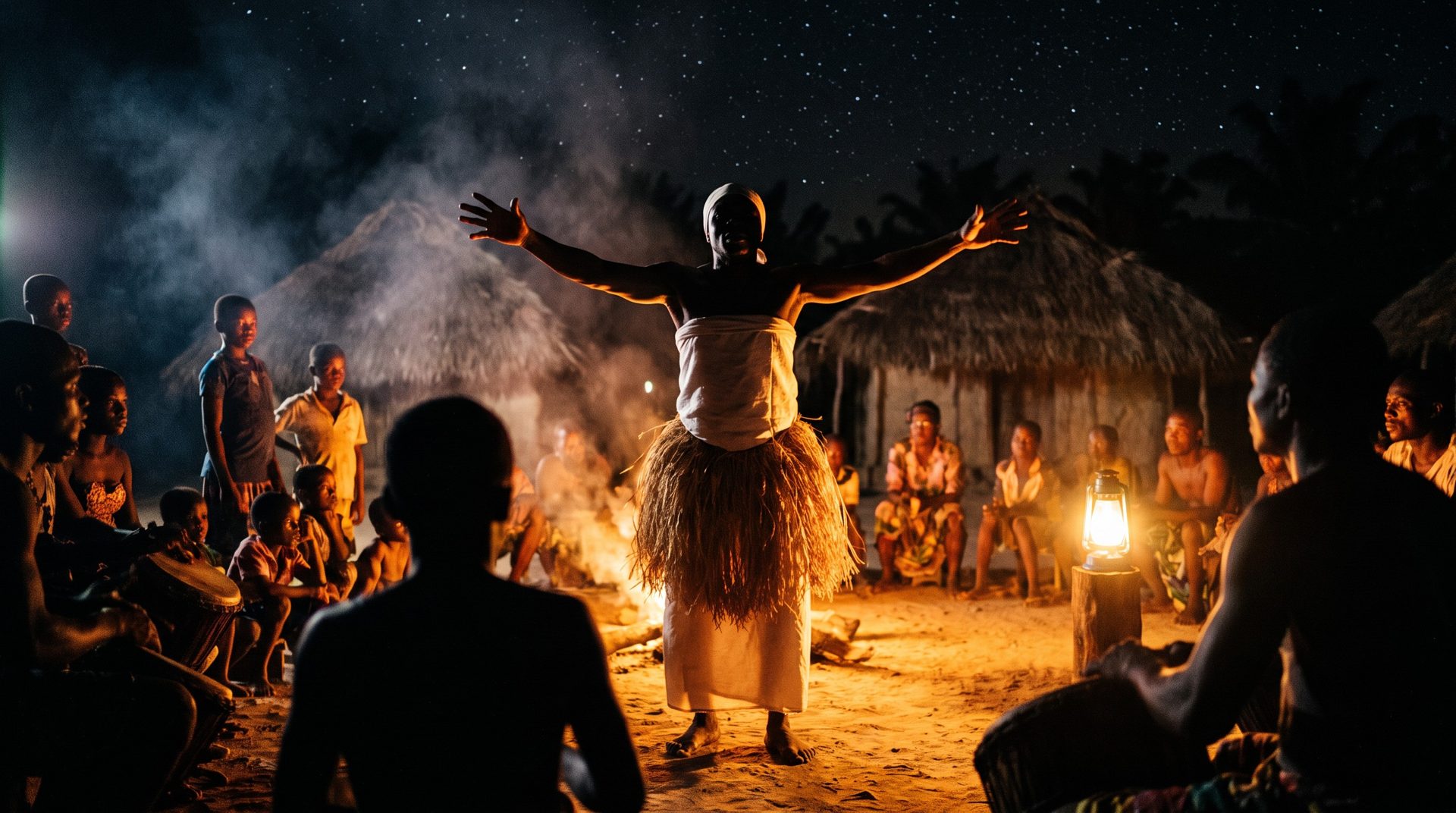
Of the three classes of spirit, the duein are the ones a family deals with daily, because they are its own.
A good death and a bad one
Doc.To die old, of natural causes, and be fully mourned is to join the ancestors. To die violently, young, or in a polluted way can bar a person from that company and consign them to the bush of the wrongly dead. This is the engine of the Ozidi Saga: the hero fights so that his father can come home.
Igbadai: questioning the corpse
Doc.The Ijaw practise a divination in which the recently dead are interrogated about the cause of their own death, so that the community learns whether the death was clean and what, if anything, must be put right.
Ikpataka dogi
Doc.Horton published an account of a Kalabari funeral rite under this name in African Notes in 1970. The rites of the dead were documented as carefully as the rites of the gods.
Duein fubara
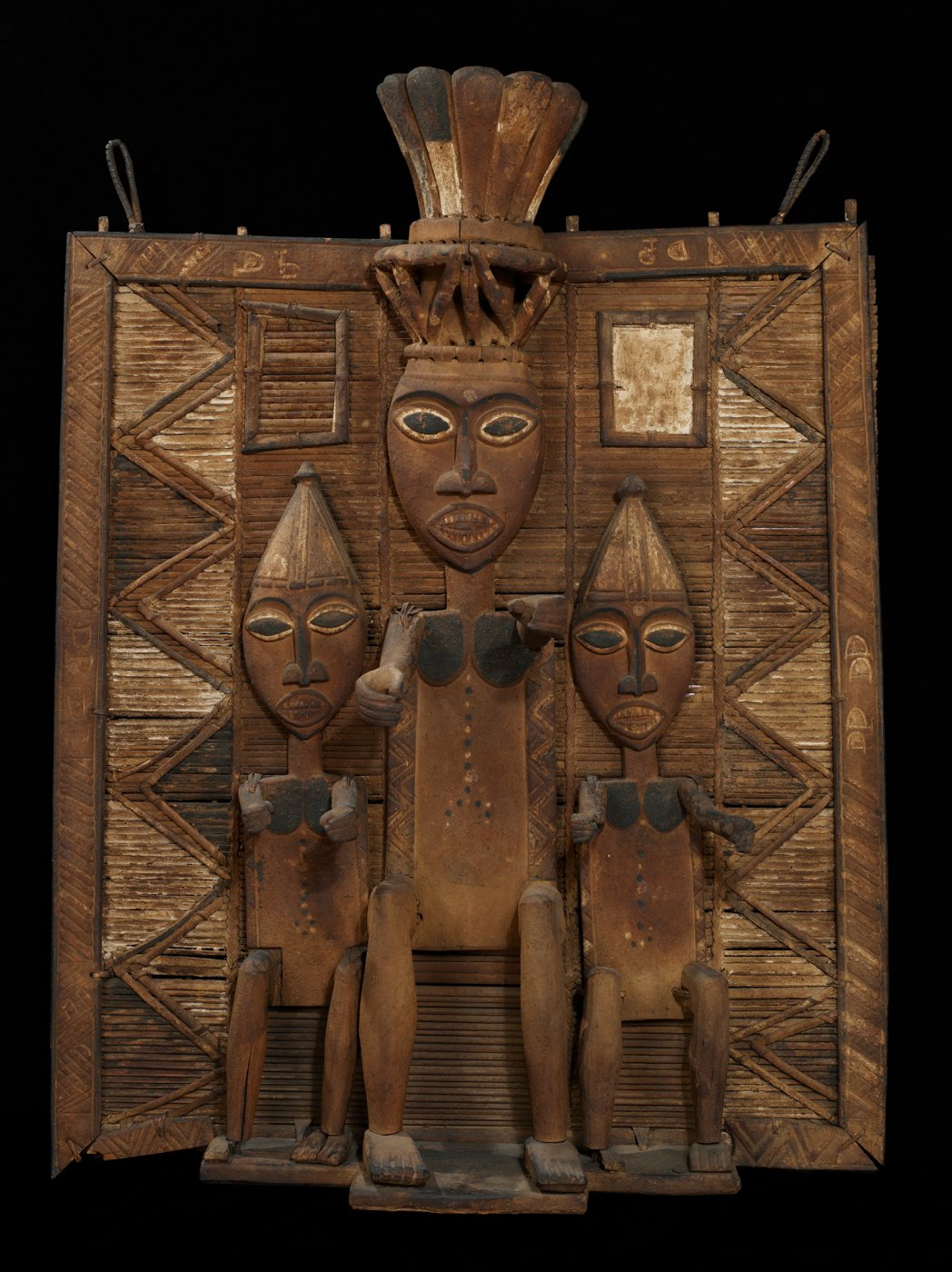
Doc.Among the Kalabari trading houses the dead head of a house was given a carved screen, a forehead of the dead, so that his spirit had an address in the meeting room. Our companion article follows those screens from the creeks to the museums of London, Minneapolis and Chicago.
The claims ledger
A great deal of invented Ijaw religion is circulating. This is what we checked, what held, and what did not.
Writing this article meant reading a lot of material that looks authoritative and is not. Several widely repeated Ijaw deity names turn out to be Yoruba or Igbo gods under a new spelling, or Kalabari royal titles mistaken for divinities, or plausible compounds assembled from real Izon words that no source records. We have printed them here rather than quietly dropping them, because a reader who meets them elsewhere deserves to know.
The supreme being is feminine across the Ijaw dialects
Temearau, Tamuno, Ayebaarau and Woyingi (Oyin) are recorded as names of one feminine creator; Oginarau is often listed with them but we could not verify it, and it is tagged contested here. Ajueyitsi's 2004 inaugural lecture called the Ijaw the classical example of the feminine concept of God in Africa.
Horton's three classes of free spirit: oru, owu, duein
Set out in his 1962 Kalabari world-view paper and quoted closely by Wariboko.
The supreme being is dual: tamuno and so
Wariboko: tamuno the female creative modality, so the directive modality; so the fixed point, tamuno the fluid point.
Destiny is spoken before birth and can be renegotiated as bibibari
Wariboko glosses bibibari as altering or nullifying the spoken word, recanting, done through a diviner.
The Kalabari world has two realms, tomi kiri and teme kiri
Tomi kiri, the place of people, is attested. Horton's scheme has four levels, not two, and the scholarly citation gives the spirit realm as teme, without kiri. Teme kiri circulates in popular Kalabari usage.
The creation stone in the Woyengi myth is named Ebubege
Okara's recorded text calls it only the Creation Stone. Ebubege appears in Nembe usage as the name of an Egbesu shrine, which is a different thing entirely.
The two streams are calm and torrential
Okara's text says one is muddy and one is clean. Calm and torrential is a later retelling.
Oguan is the Ijaw god of iron
No Ijaw iron deity could be found in any source. This appears to be the Yoruba and Edo Ogun under another spelling.
Amakiri is the Ijaw earth deity
Amakiri, or Amachree, is the name of the Kalabari royal dynasty. No Ijaw earth deity by that or any name surfaced in Horton or Alagoa.
Agadagba is a god of martial power
Agadagba is the title of the paramount ruler of Arogbo-Ijaw, whose seat is the town of Agadagba-Obon in Ondo State. It is also the name in Agadagba-bou, the extinct central-delta settlement of Ijo origin tradition — a different place, and itself unattested outside that tradition. A title and two places, not a deity, and not an architectural term either.
Nso means taboo and Izu Obi means purity of heart in Ijaw
Both are Igbo, not Izon. Nso and nso ala belong to Igbo religious vocabulary tied to the earth goddess Ala. We could not establish the Izon word for taboo and so do not give one.
Toru means sacred white kaolin clay
Toru means creek or river, which is why it runs through place names such as Toru-Orua. The Izon word for ritual chalk remains an open question.
Dire means absolute truth or righteousness
Williamson's Kolokuma Izon dictionary gives diri as medicine, including medicine made for protection.
Tamara-owei, Ama-teme-suo, Duenei, Oru-Otu, Egberipou, Ogbo and Yeli are Ijaw religious terms
None could be attested anywhere. They are built from real Izon morphemes, which is what makes them plausible, but the compounds themselves are not recorded. Egberi is real and means story or word, not guardian spirit.
Owu-Aru-Sun was held in 1908, 1927, 1973 and 1991
Those four years recur across independent accounts of the Buguma festival.
Mami Wata began as a European poster
A chromolithograph of the snake charmer billed as Nala Damajanti, in life Mathilde Marie Amelia Poupon, reached West Africa after 1887 and had been carved into a Niger Delta water-spirit headdress by 1901. She is a late arrival grafted onto the far older owu.
Adumu is the python-form chief of the water spirits
Recorded for the Kalabari and the Nembe alike. The python is his, and is never killed. What is not recorded anywhere is the scheme of nine coils standing for nine ascending levels of consciousness, which belongs to our Living Waters series and not to the sources.
Oginarau is a recorded name of the Supreme Being
It appears in a survey of Izon divine names that we could not obtain, and nowhere else we can reach. We keep it on the page, flagged, rather than either asserting it or dropping a name that Ijaw readers may well know.
Benikurukuru is an Ijaw divinity
Held in community tradition. No scholarly source records it, nor the Agadagba-bou narrative it belongs to.
Glossary
Only words we could attest. Where a term is disputed it appears in the ledger above instead.
Body; the material, observable half of anything.
Spirit; the immaterial half, able to be in two places at once.
Destiny, spoken before birth; also the directive modality of the supreme being.
A second Kalabari word for that same chosen destiny.
Recanting; the ritual renegotiation of a destiny.
The destiny of a house, as distinct from a person's.
The place of people; the visible world.
A founding hero; also, more loosely, a divinity.
Water spirit; the water people.
Water spirit, as used on Kalabari masquerade crests.
The dead of a lineage.
The sacred patterned animals whose skins are carved onto sculpture.
Divination by questioning the recently dead.
The Kalabari masquerade society, the dancing people.
Medicine, including medicine made for protection.
The water people, as the Ijaw name for themselves.
This site also carries an eight-part series called The Living Waters, written earlier and in a different spirit — devotional and interpretive rather than sourced. On several points it says things this page contradicts, and where the two disagree, this page is the one to trust.
The series has been gone through against the same sources used here, and every page now carries the corrections in place. The substantive ones: destiny is chosen by the spirit, not assigned to it; so means destiny and not air; duein means the lineage’s dead and not shadow; Fenibeso is the war god of Okrika and not a celestial bird; Owamekaso (Akaso) heads the oru and is not a name of the creator; Agadagba is a royal title and not a house pillar. Its numbered schemes — nine gates, twelve paddles, seven taboos — are marked as the series’ own, because no source we could find has them.
One correction runs the other way. The series treats Adumu as a teacher of nine wisdoms; that scheme is invented, but Adumu himself is not — he is the python-form chief of the water spirits, recorded for the Kalabari and the Nembe, as the roll above has him.
- 1.Horton, R. (1962). The Kalabari World-View: An Outline and Interpretation. Africa 32(3).
- 2.Horton, R. (1963). The Kalabari Ekine Society: A Borderland of Religion and Art. Africa 33(2), 94–114.
- 3.Horton, R. (1970). Ikpataka Dogi: A Kalabari Funeral Rite. African Notes 5(3), 57–72.
- 4.Wariboko, N. (1999). Kalabari: A Study in Synthetic Ideal-type. Nordic Journal of African Studies 8(1), 80–92.
- 5.Wariboko, N. (1999). Counterfoil Choices in the Kalabari Life Cycle. African Studies Quarterly 3(1).
- 6.Okara, G. (1966). Ogboinba: An Ijo Creation Myth, in U. Beier (ed.), The Origin of Life and Death. Heinemann.
- 7.Okara, G. Journey to the Presence of Woyingi (full recorded text).
- 8.Azorbo, G. T. & Ufford-Azorbo, I. (2019). Interrogating the Feminine Conception of the Supreme Being among the Ijaw. African Research Review 13(2).
- 9.Tasie, G. & Olumati, R. An Overview of Niger-Delta Indigenous Religions. LWATI: A Journal of Contemporary Research.
- 10.Fortes, M. (1983). Oedipus and Job in West African Religion, with an essay by Robin Horton. Cambridge University Press.
- 11.Anderson, M. G. & Peek, P. M. (eds.) (2002). Ways of the Rivers: Arts and Environment of the Niger Delta. UCLA Fowler Museum.
- 12.Williamson, K. & Blench, R. Dictionary of Kolokuma Izon.
- 13.Horton, R. & Speed, F. (1966). Duminea: A Festival for the Water Spirits (film). Royal Anthropological Institute.
- 14.Metropolitan Museum of Art. Bini oru (water spirit) crest, Ijo peoples.
- 15.Clark-Bekederemo, J. P. (1991). The Ozidi Saga, collected from Okabou Ojobolo, with an introduction by Isidore Okpewho. Howard University Press.
- 16.Fowler Museum (2008). Mami Wata: Arts for Water Spirits in Africa and Its Diasporas.
- 17.Owu-Aru-Sun Festival of the Kalabari.
- 18.Federal Ministry of Art, Culture and the Creative Economy. Amaseikumor Festival, Gbaramatu Kingdom.
- 19.IjawConnect. Egbesu: The Law of the Leopard (companion article).
- 20.IjawConnect. Foreheads of the Dead: The Duein Fubara (companion article).
About this article. Researched and written by the IjawConnect Editorial Board with three independent fact-checking passes. Where a claim rests on oral tradition it is labelled as such; where a widely repeated term could not be traced to any source, we say so rather than repeat it. The Kalabari are over-represented in the scholarly record because Robin Horton worked there, so this guide inevitably leans east; central and western Izon and Okrika deserve documentation of their own, and corrections from custodians, priests and elders are welcome through the submission page.