Foreheads of the Dead
The duein fubara of the Kalabari Ijo
A theory of destiny lodged in the forehead, a memorial built like a picture frame, a ship worn as a crown, and eleven screens that left Degema in crates in 1916.
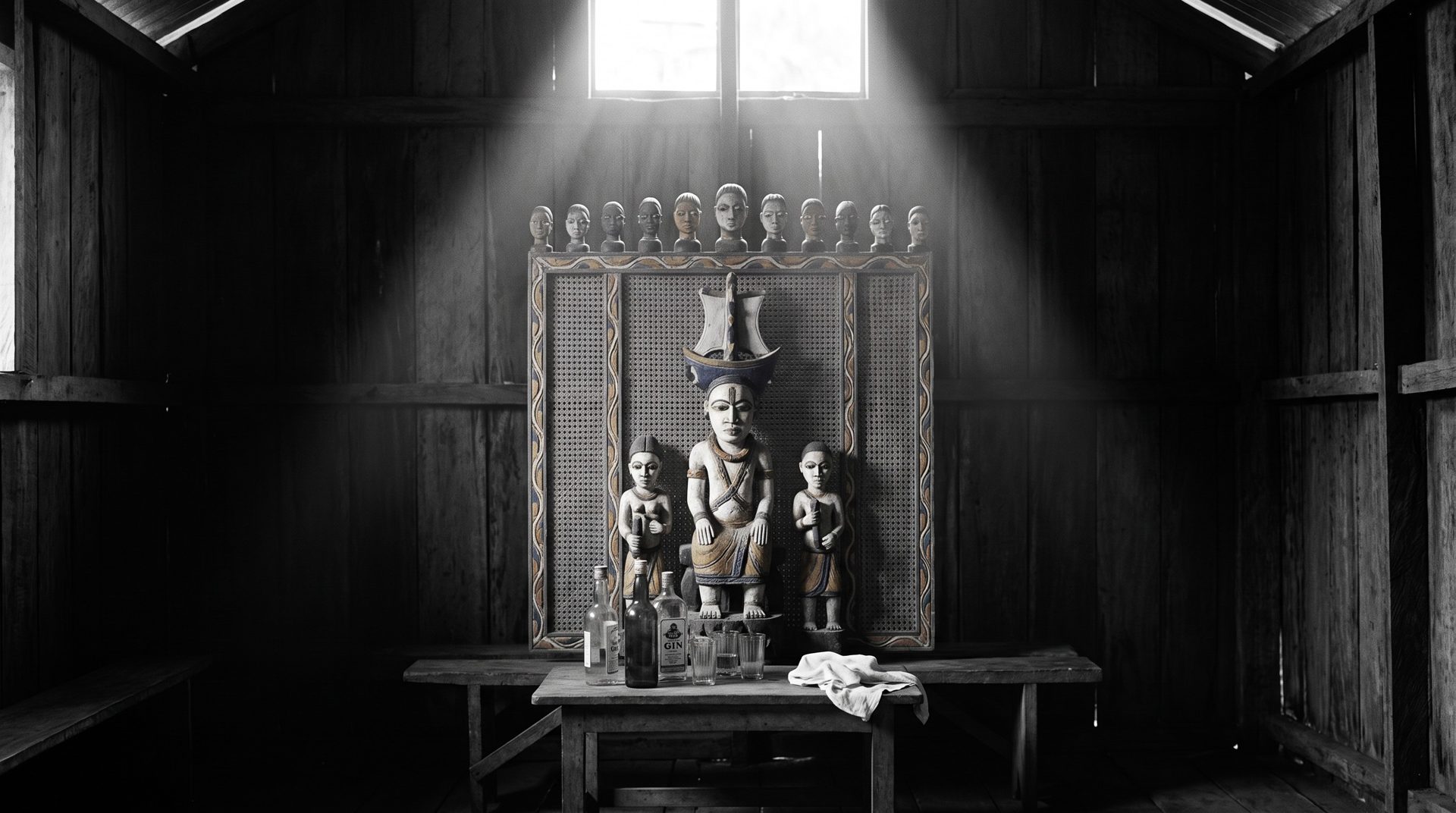
In a meeting hall in a Kalabari town, a carved man sits inside a wooden frame and stares out at the room. He wears a sailing ship on his head. Two smaller men stand beside him; a row of small heads runs along the top of the frame; a table of bottles and glasses stands in front. He is not a portrait. He is a forehead.
Duein fubara means exactly that in Kalabari: forehead of the dead. The forehead is where the Kalabari locate a person's so, the destiny spoken before birth, and a memorial for a great man is a seat for the destiny that made him great. The screens are built, not carved: separate pieces nailed and lashed to a cane backing, framed like a picture, in a way almost nothing else in West African art is. Scholars think that framing came up the river on European ships. What the Kalabari did with it was entirely their own.
This article follows the screens through the whole of their life: the theory of the person that names them, the canoe houses that needed them, the carvers and the rites that made and fed them, the revival of 1915 that threatened them, the crates of 1916 that carried eleven of them to England, the museums that hold them now, and the argument about whether they should come home. Every claim is tagged for how well it is supported.
Nine screens to the British Museum, two to the Pitt Rivers Museum in Oxford, by the Museum's own account.
The screens were registered only after Talbot's death, without records of how they had been assembled.
The range of the eleven nineteenth-century screens the Smithsonian exhibited in 1988. Built, not carved: wood, cane, pigment, cloth.
By the Museum of Fine Arts, Boston in 2014, on grounds of forged export papers.
Why a memorial is a forehead
Three Kalabari words explain the whole object: the spirit that chooses, the destiny it chose, and the dead who must be kept close.
So
DocumentedThe so is the destiny the teme chose: wealth or poverty, the manner of death, the number of children. The Kalabari locate it in the forehead. A person whose life is going badly can, through a diviner, have the so 'changed'; a person whose life went well had a strong so, and his forehead, fubara, was where it lived. This is why a memorial for a great man is called his forehead.
The Smithsonian's National Museum of African Art puts it in one sentence: the term relates to the association of a person's so, the fate that governs his or her fortunes, with the forehead, and sculptures such as the screens provide a means of controlling disembodied spirits by fixing their position. To fix a spirit is to give it an address. A house whose founder has an address can feed him, consult him and, when he is angry, know where to go to make peace.
The screens are the ancestral half of a system whose other half IjawConnect has described elsewhere: the owu, the water people danced by the Ekine society, and the oru, the founding heroes of the towns. Egbesu, the justice deity of the central and western delta, belongs to a different register of the same world. In the Kalabari east, what a great man needed after death was not a law but a seat.
Anatomy of a screen
Click any part of the diagram. Then change the headdress and watch the ancestor's identity change with it.
Schematic, not a copy of any museum screen. Proportions follow the surviving examples: a large central figure, two attendants, heads along the rail.
The masquerade headdress
DocumentedThe single most important identifier. A man of standing held rights to particular Ekine masquerades in life; his screen shows him in one of them, but with the face uncovered as it never was in performance. Documented on surviving screens: bekinarusibi ('white man's ship on head'), otobo (the hippopotamus), alagba and ngbula.
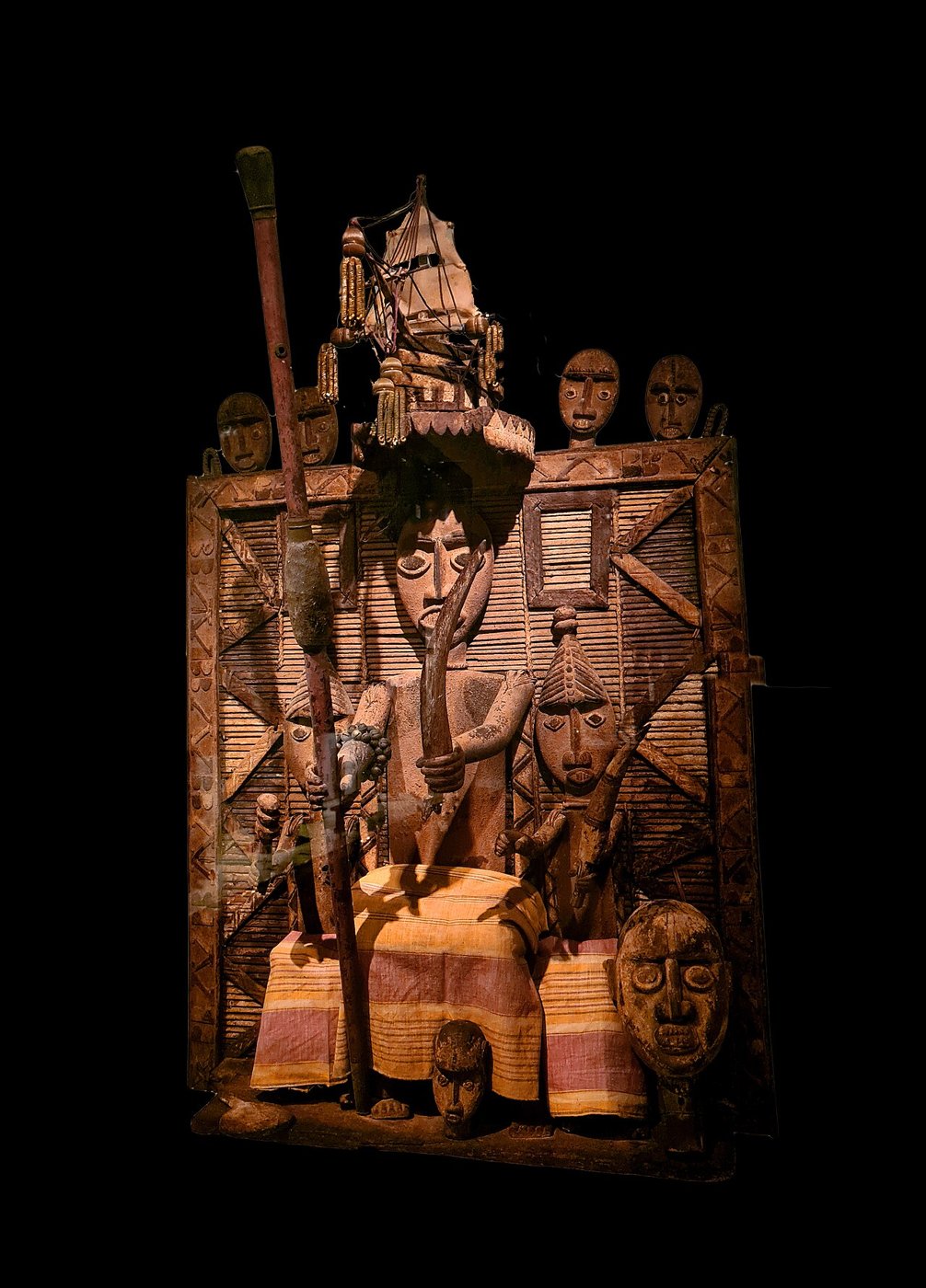
A water-spirit masquerade whose headdress is a model European sailing ship, alluding to the wealth that came up the river in the Atlantic trade. The British Museum's most reproduced screen, Af1950,45.334, wears it; the Museum's record says Amachree I, a house head who became king, was the first to be commemorated by a screen of this design.
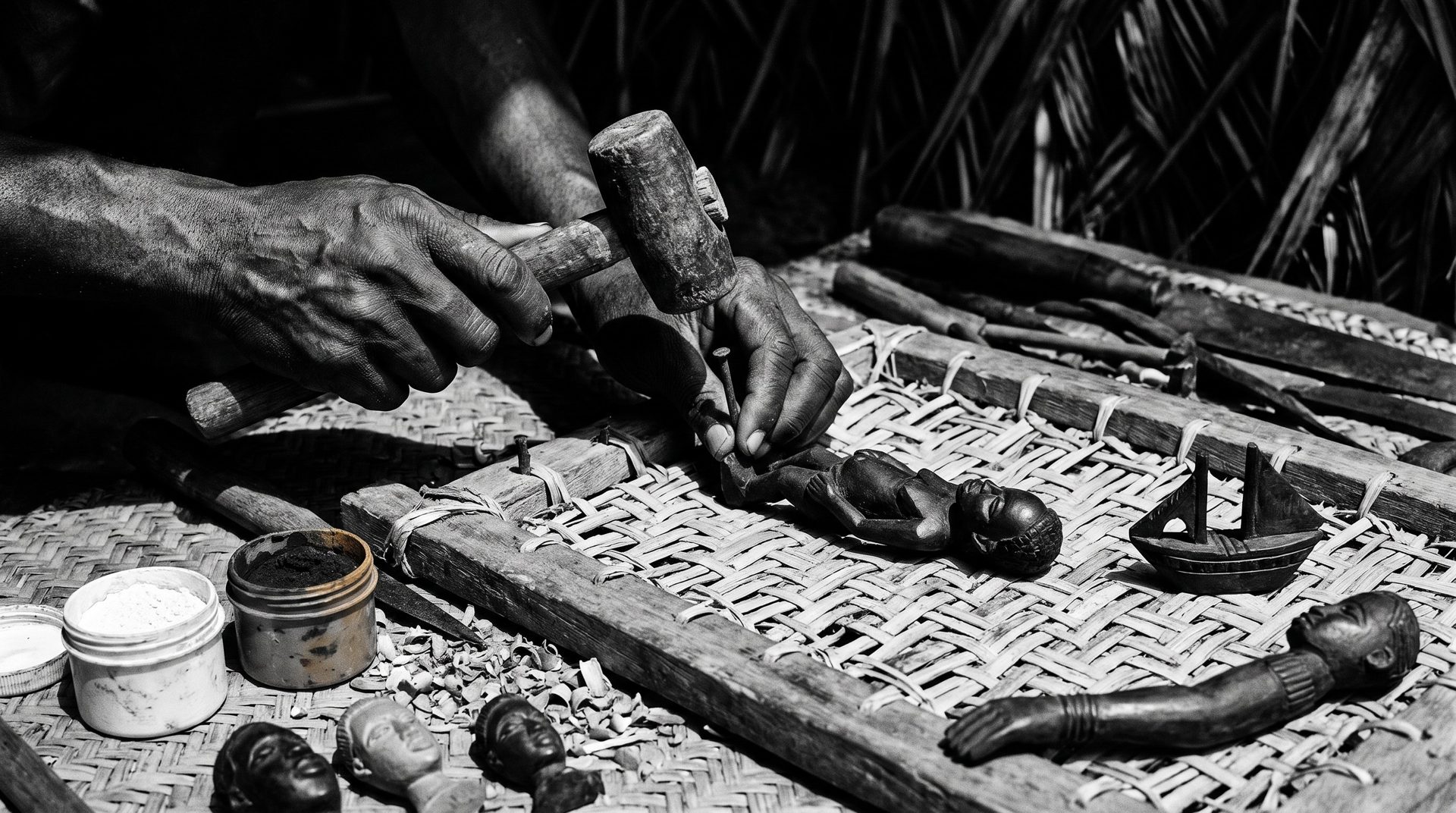
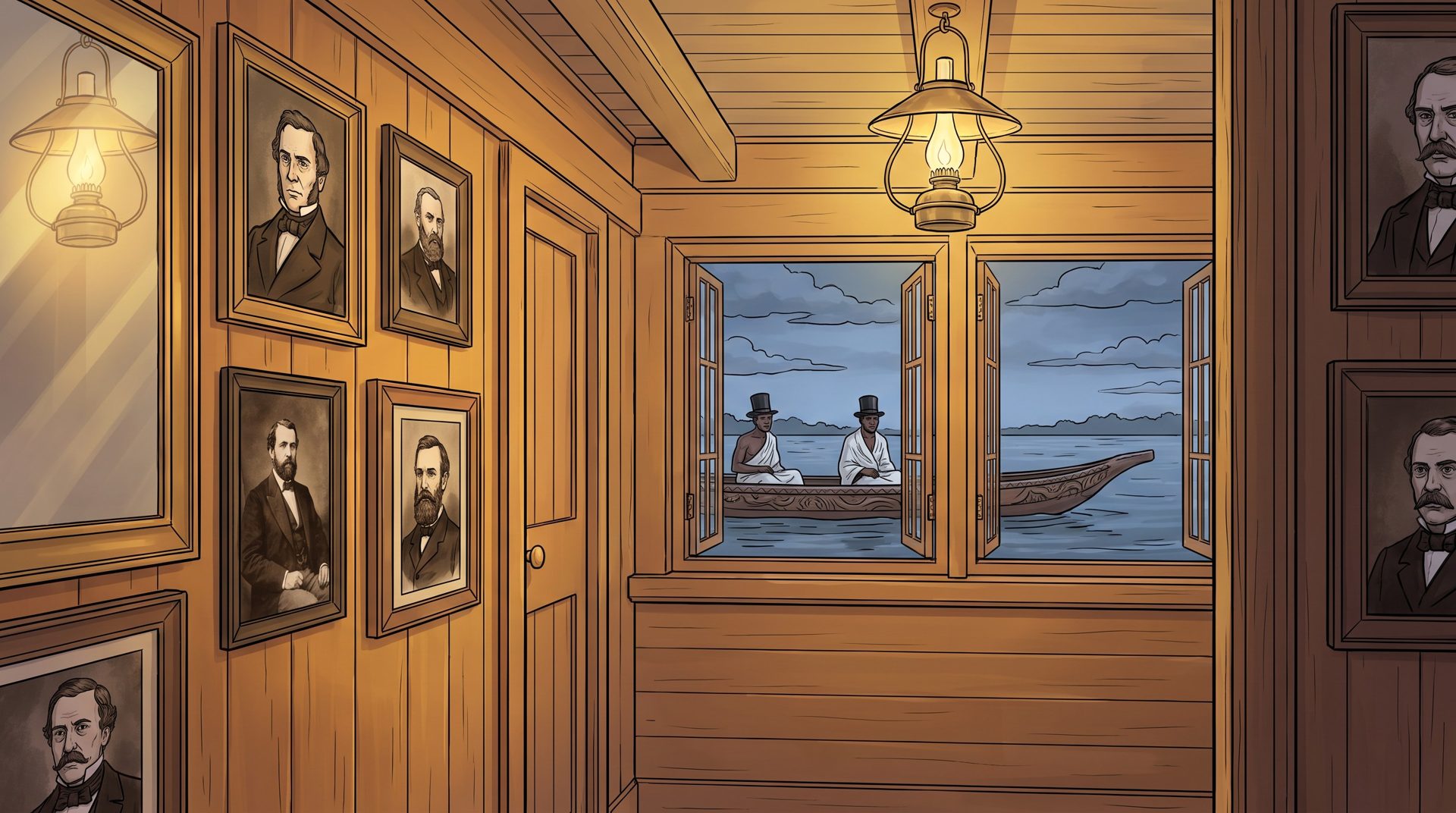
Almost all West African figure sculpture is cut from a single block. The duein fubara is assembled. Nigel Barley's 1988 study, still the standard work, argued that the assembly and the framing show a familiarity with European ship carpentry, and that the frontal, framed composition follows the portraits, prints and later photographs that Kalabari traders saw aboard ship and in the factories on the river. Barley went further, suggesting the screens were made by the family that provided river pilots to Western ships, and that the pilots read the framed portraits in the captains' cabins as the white men's ancestors. The Kalabari, on this view, borrowed the reverence and the frame, and put their own dead inside it.
It is a persuasive reading and we tag it as interpretation, not fact: an argument from form, endorsed by nearly every museum that owns a screen, without a documented workshop history behind it. What is not in doubt is the result. As the Fine Arts Museums of San Francisco summarise it, the construction shows knowledge of European carpentry, but the figures are distinctly Kalabari.
The canoe house
A corporation that could man a war canoe, open to talent from anywhere, and in need of a way to honour founders the old cults could not hold.
A corporation, not a family
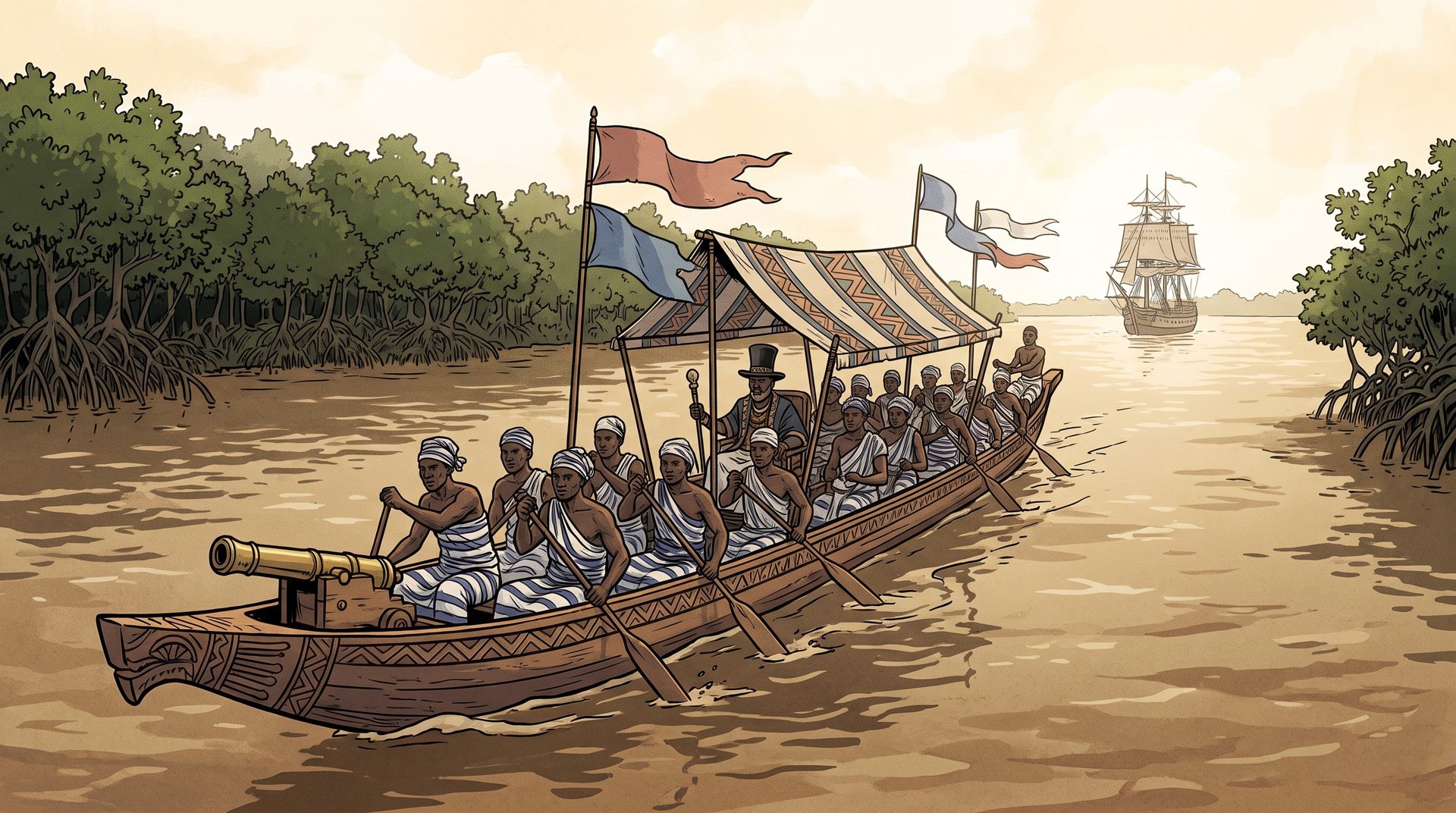
G. I. Jones called the canoe house 'a compact and well organized trading and fighting corporation, capable of manning and maintaining a war canoe'. It grew by adoption, marriage, clientage and the absorption of enslaved people, not by birth alone.
The war canoe
A dugout that could carry thirty to fifty men and a cannon at the bow. Manning one was the test of a house's standing; a house that could not was absorbed into one that could.
The open road to the top
A capable man of any origin could rise to head a house. The founder of the Kalabari royal house, Amachree (Amakiri) I, who came to Elem Kalabari from outside it, is the great example. The British Museum's record says he was the first to be commemorated by a screen of this design; the dates make that a retrospective honour at best, since E. J. Alagoa places his reign in the late seventeenth and early eighteenth centuries and the surviving screens are nineteenth-century.
Why a new memorial was needed
The older ancestral cults belonged to lineages of Kalabari descent. A house head of mixed or foreign origin had no place in them. The duein fubara gave such men, and the corporations they built, a seat for their dead founder that the old order had not provided.
Elem Kalabari, the city Europeans called New Calabar, was for centuries one of the trading powers of the eastern delta, exchanging ivory, pepper, palm oil and enslaved people for brass, guns, gunpowder, spirits and cloth. The wealth and the violence of that trade rebuilt Kalabari society around the wari, the canoe house. A house was a lineage and a business and a regiment at once, and a clever man who arrived as a slave could end as its head. Honouring the dead founder lent his living successor the authority to govern a corporation of kin, clients and dependents. The Art Institute of Chicago's formulation is exact: honouring the amanyanabo of the past lent legitimacy to the amanyanabo of the present.
In 1879 the city broke apart in civil war between the Amachree and Barboy factions. By 1884 the Kalabari had founded the new towns of Abonnema, Buguma and Bakana near the British post at Degema, and the houses carried their screens with them. It was in those towns, a generation later, that the screens would face the fire.
Feeding the dead
A duein fubara was not an artwork to the house that owned it. It was a shrine with a diet, a schedule and a temper.
Commission
Oral traditionAfter a house head's death the house commissioned a screen. Kalabari tradition, recorded by Nigel Barley, credits the finest work to the Pokia family of Ifoko, an attribution museums now print on their labels, and says the carver waited for the dead man to visit him in a dream and show how the screen should look.
Two features of Kalabari practice matter for anyone who would call these objects heritage. The screen was optional. Barley recorded that it could be functionally replaced by a scrap of white cloth; the carving was the grandest expression of a shrine, not its essence. And the screen was mutable. Backings rotted, termites ate figures, and houses renewed, rearranged and repainted their screens as 'the same' screen. Recognisability to the spirit mattered; the integrity a connoisseur prizes did not. A museum that freezes one configuration under glass has preserved a moment, not the object as its makers understood it.
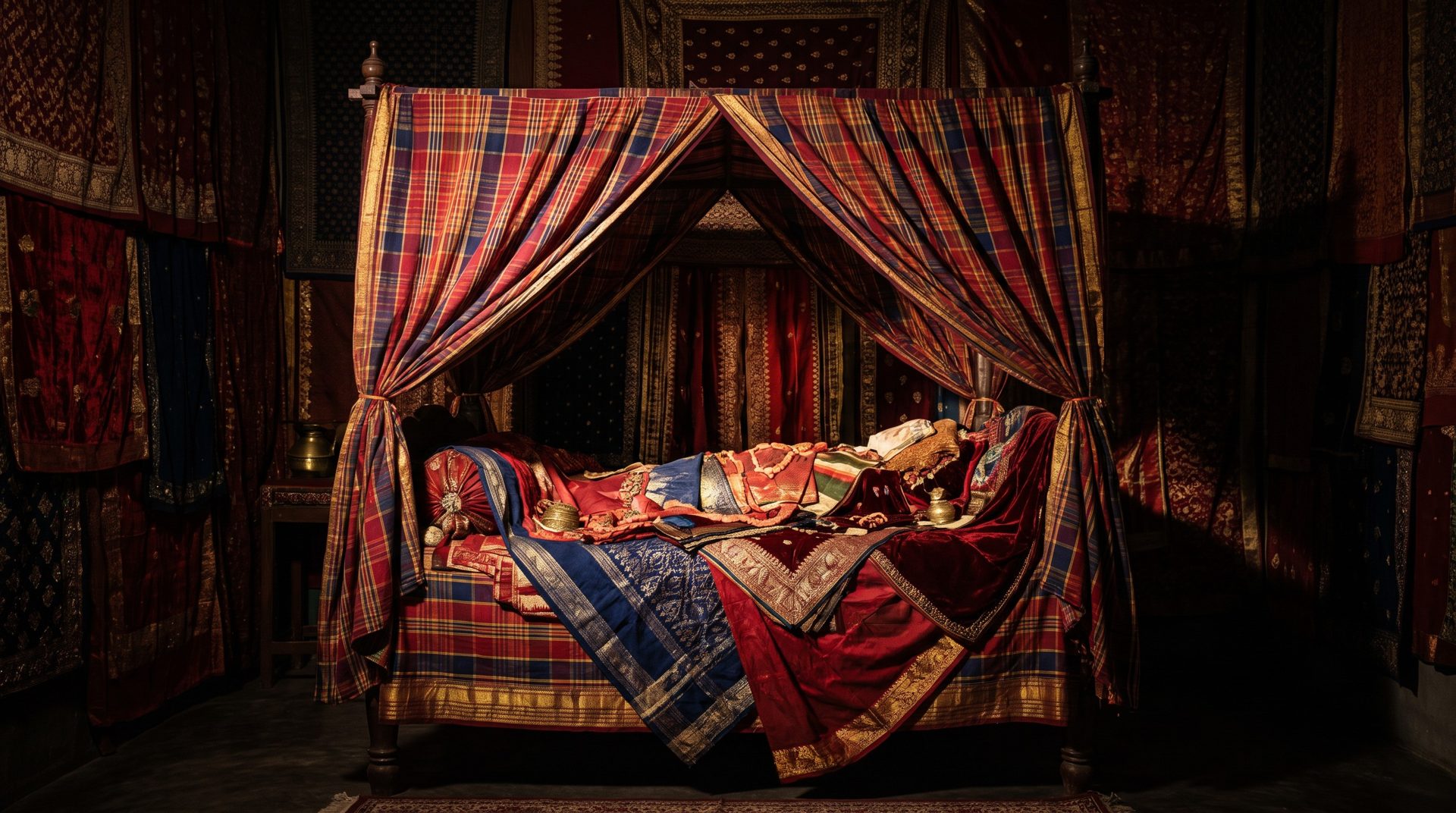
The same instinct that built the screens still fills Kalabari funerals. Joanne Eicher and Tonye Erekosima documented how the dead are laid out on cloth-draped beds in rooms hung with ancestral textiles, madras, velvet and pelete bite, the cut-thread cloth that Kalabari women make from imported madras by drawing out threads. It is the same aesthetic of assembled, imported materials turned to the honouring of the dead, in cloth instead of wood, and it has never stopped.
1916 and after
A prophet's bonfires, a district officer's crates, a catalogue thirty-four years late, and the museums that own the result.
Talbot's crates
According to the British Museum's account, Kalabari chiefs place a number of screens under the protection of the district officer P. Amaury Talbot. The screens are dismantled at Degema and shipped. Talbot gives nine to the British Museum and two to the Pitt Rivers Museum in Oxford.
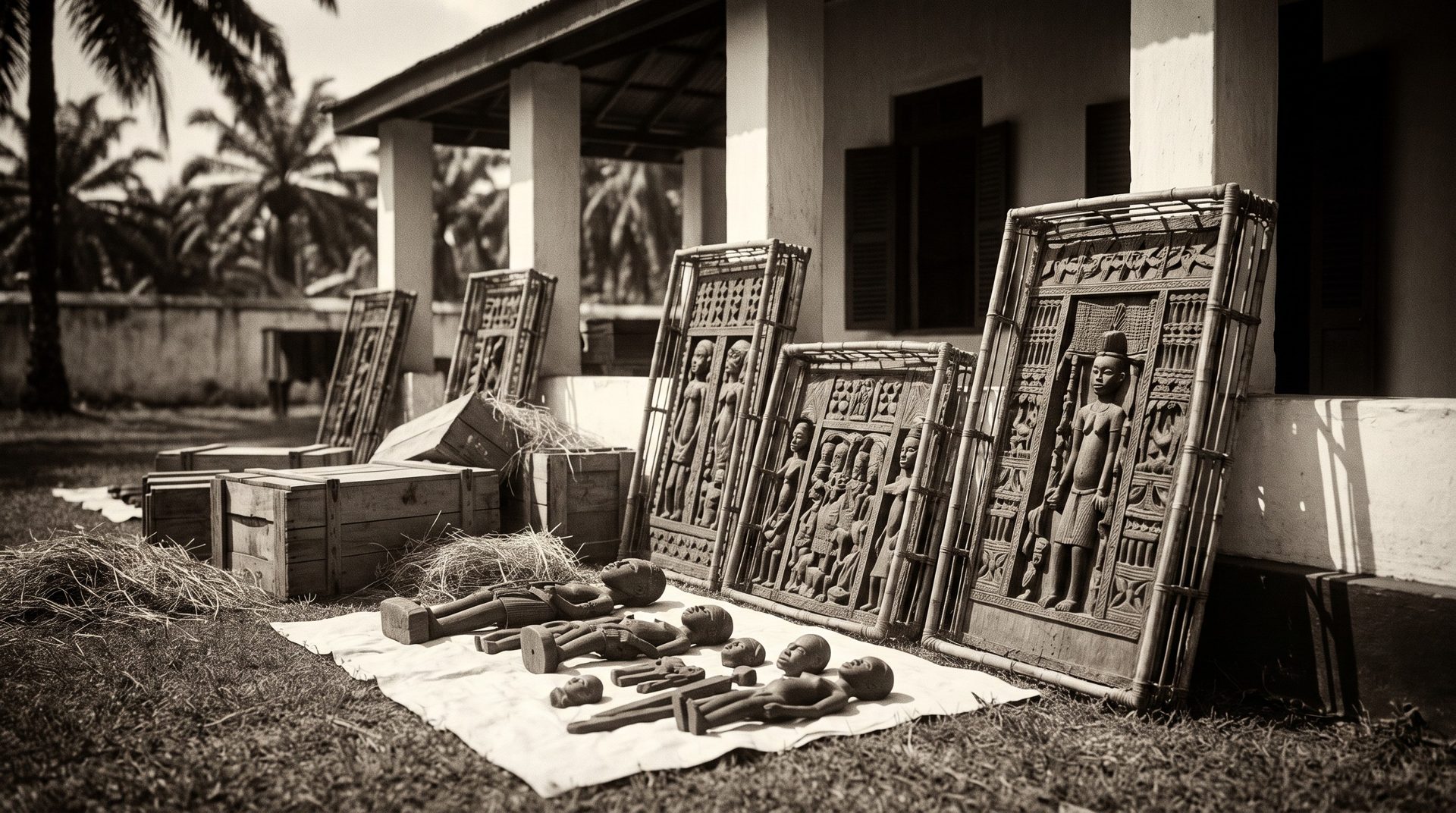
The revival came from inside the Kalabari world. Garrick Sokari Braide was a Kalabari Anglican lay evangelist, born at Obonoma and based at Bakana, who in 1915 preached healing, abstinence, Sunday observance and the destruction of charms and shrines, and drew a following the Dictionary of African Christian Biography puts at more than a million. His converts burned what they found. The colonial government imprisoned him in 1916; he died in 1918, and his movement became the Christ Army Church, one of Africa's first independent churches.
The British Museum's account is that, at the request of Kalabari chiefs, a number of screens were placed under the protection of the district officer P. Amaury Talbot, who presented nine to the British Museum and two to the Pitt Rivers Museum. They were dismantled in haste, arrived without records and were not catalogued until 1950, five years after Talbot's death, when William Fagg registered them as Af1950,45.331 to 348. Barley later found that there was no satisfactory evidence to guide their reassembly and that mistakes were made; detachable pieces, he wrote, had been redistributed at random. Any confident reading of a particular London screen's arrangement has to carry that warning.
Screens are also held in Minneapolis, Detroit, Chicago, New Orleans, San Francisco, New Haven and Geneva, and have passed through the European art market. Not all are what they seem. Because Kalabari houses renewed and rearranged their screens as a matter of course, and because dealers have assembled saleable objects from loose parts, a screen under glass may be a composite, a later replacement or a reassembly rather than one intact nineteenth-century shrine.
A diaspora of foreheads
Every institution we could document, with what it holds and how it came to hold it.
Given by P. Amaury Talbot; registered 1950 as Af1950,45.331–348. Includes the bekinarusibi screen identified as Amakiri I.
Collection recordAlso from Talbot, per the British Museum's account.
Acquired 1974 through the John R. Van Derlip Fund, accession 74.22.
Collection recordFigure Screen (Duein Fubara), reference 2005.154, early twentieth century, wood, pigment and fibre. Its provenance runs from Rivers State to Lomé and a New Orleans dealer before purchase in 2005.
Collection recordAncestral Screen, late nineteenth century, accession 2003.21, in iroko wood with earth pigments and plant fibres.
Collection recordAncestor Memorial Screen, accession 97.160, recorded as made in Abonnema and attributed to the Pokia family atelier of Ifoko.
Collection recordThe de Young's text sums up the consensus: European carpentry, distinctly Kalabari figures.
Collection record'Kalabari Ancestral Screens: Levels of Meaning', 11 November 1988 to 29 January 1989, showed eleven screens on loan; the Museum's object text is the source for the so-and-forehead explanation.
Holds Kalabari screen material in wood, raffia, paint and textile. The inventory number and commentary cited online for it could not be verified against the museum's own database.
The screen returned by Boston in 2014, plus the screens that never left: rebuilt, repainted and still honoured in Kalabari meeting halls.
Held by the J. B. Coleman Library and digitised in 2022 within its African Sculptures and Masks collection; donated by Dan Wainberg in 2003. A tall capped headdress over the house head, four small heads along the upper rail, attendants carrying blades and staffs, disc motifs around the border. The only screen we have found in a historically Black university’s collection, and the museum image is released under a Creative Commons licence, unusually for these objects.
Collection record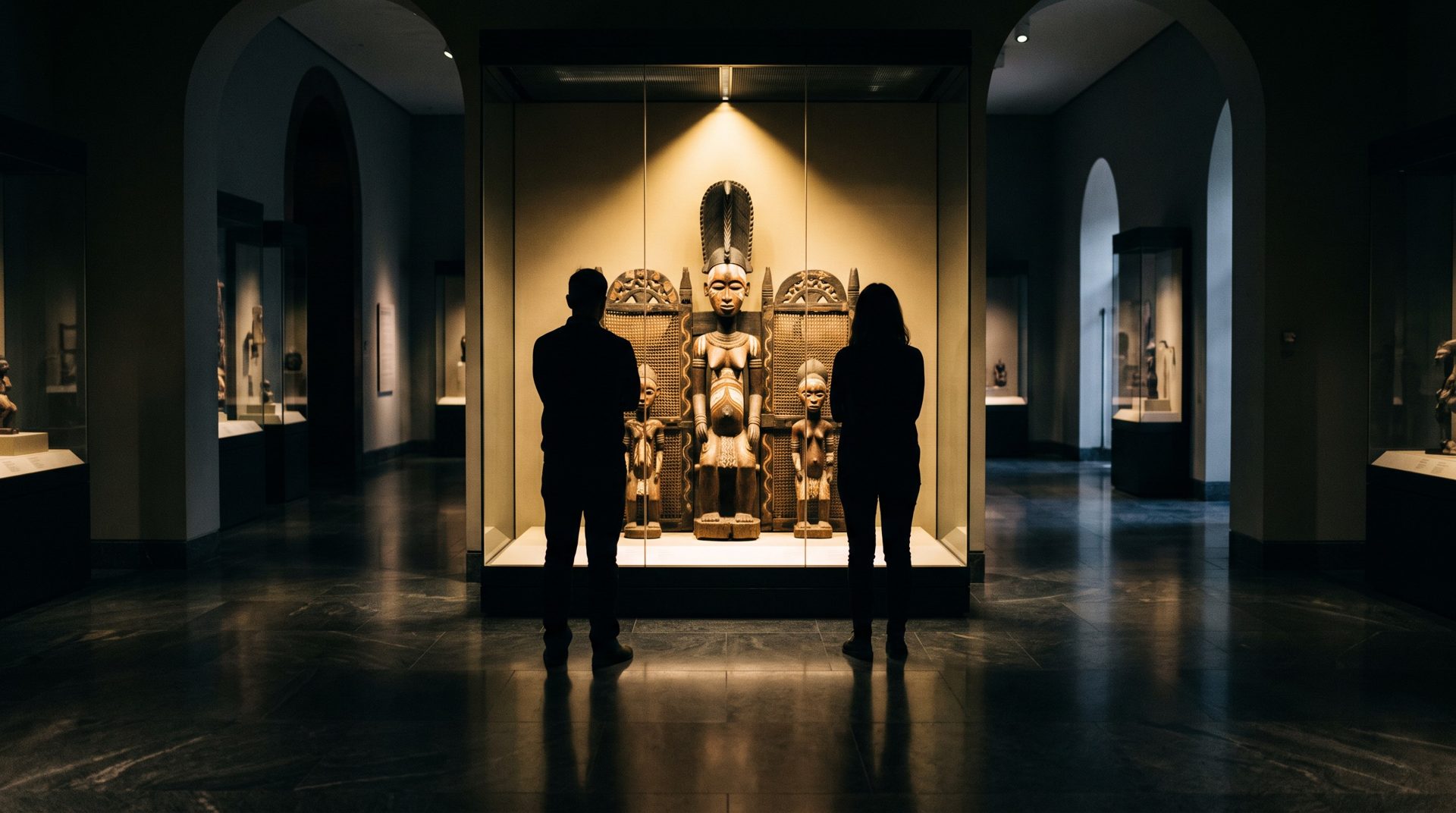
Not everything left. The British Museum's own text says ancestral shrines are still commissioned and honoured by Kalabari people, and Barley photographed rebuilt screens in Buguma in the 1980s. The framed photograph, the very form that may have inspired the screens, has taken over much of the memorial role. And Kalabari artists have carried the imagery outward: the sculptor Sokari Douglas Camp, born in Buguma in 1958 and raised in the household of the anthropologist Robin Horton, has made welded-steel masquerade figures with boats and households on their heads, one of which the British Museum also holds.
The screens themselves
What survives, what we are free to show you, and what is still locked behind a museum's photograph.
Three of these are photographs of real screens that anyone may republish. Two are reconstructions we built from the documented iconography, because the museums that hold those objects reserve their own pictures. The rest are screens we can name but cannot yet show. That gap is the repatriation argument in miniature: the objects left the delta, and so did the right to picture them.
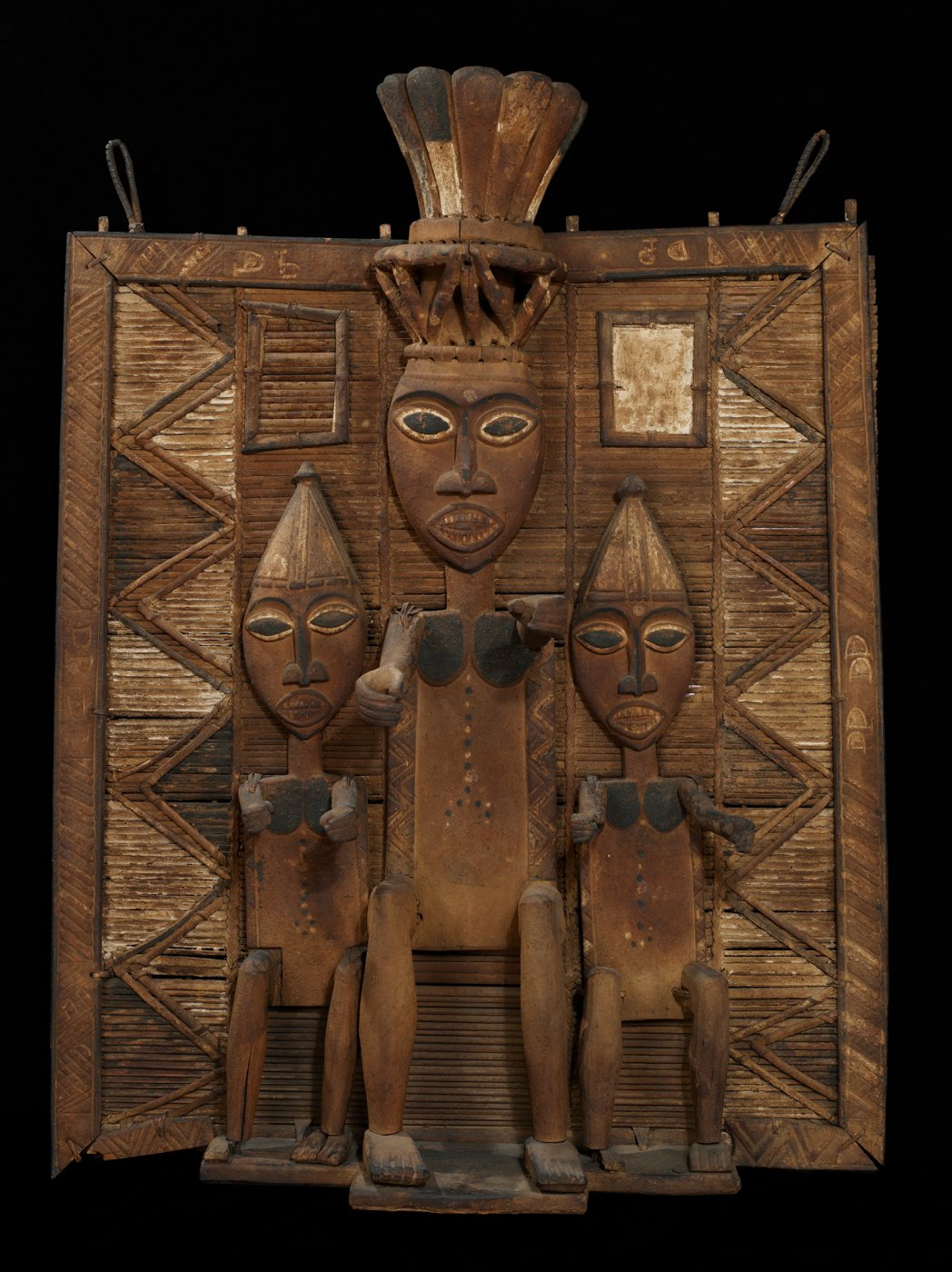 Photograph
Funerary screen
Minneapolis Institute of Art, Minneapolis · 74.22
Late 19th century · Wood, raffia, pigment
The one screen whose museum photograph is free of all restriction, so we host it here in full. A bladed crown over the house head, two attendants in pointed caps, zigzag stiles and a cane-slat ground.
Minneapolis Institute of Art, The John R. Van Derlip Fund
 Photograph
Funerary screen, bekinarusibi
British Museum, London · Af1950,45.334
19th century · Wood, cane
The most reproduced of all the screens, and one of the nine Talbot sent from Degema in 1916. The Museum's own photograph is licensed CC BY-NC-SA, which this site can rely on — it carries no advertising and earns nothing from images. We use this one anyway: taken by a visitor, it is free to reuse with credit and carries no ShareAlike condition.
Photograph by Ji-Elle, CC BY-SA 4.0, via Wikimedia Commons
 Photograph
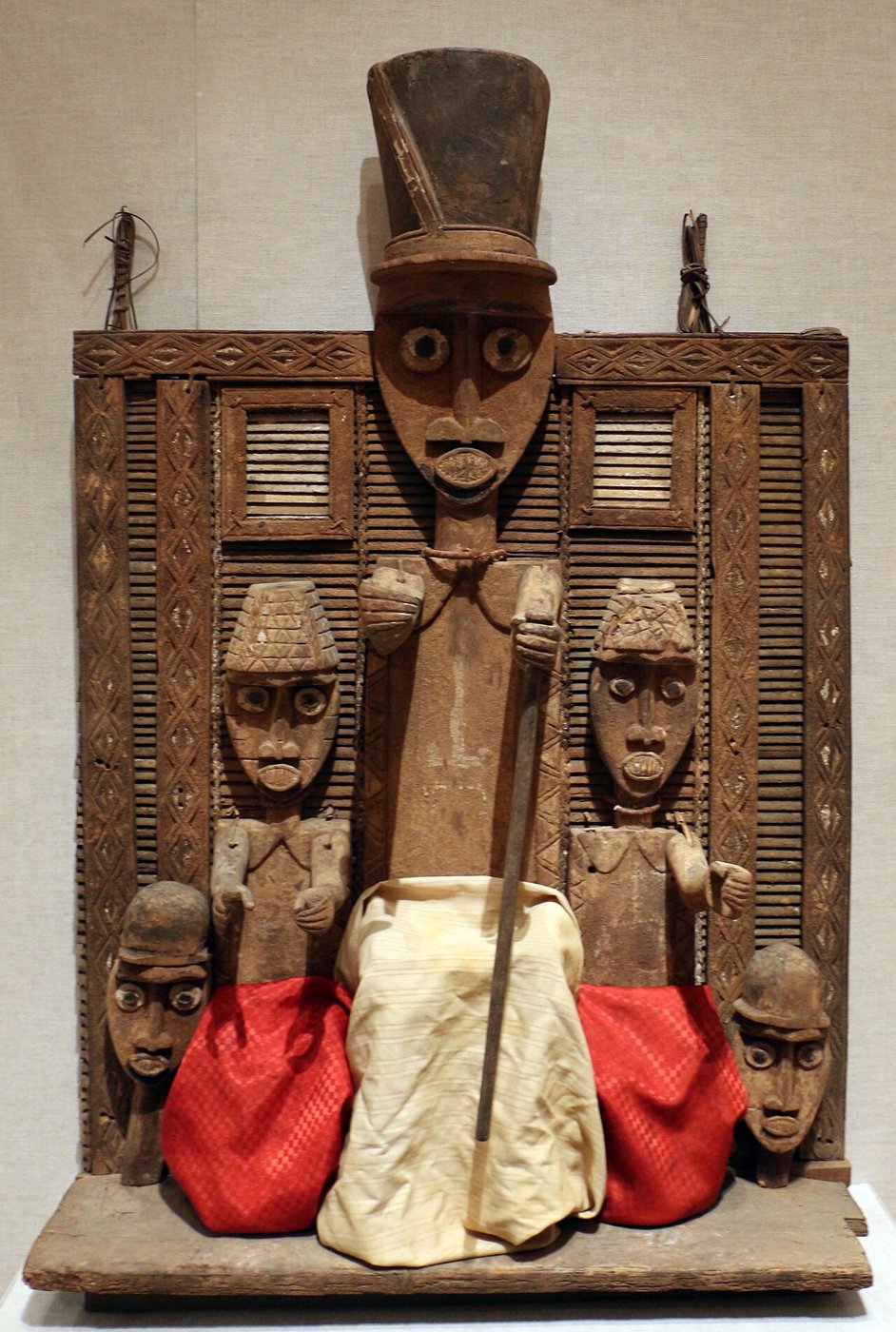
Figure Screen (Duein Fubara)
Art Institute of Chicago, Chicago · 2005.154
Early 20th century · Wood, pigment and fibre
The top-hat screen: no masquerade at all, but a house head in European dress with a walking stick. The Institute's own photograph is not free to reuse; this visitor photograph of the same object is.
Photograph by Sailko, CC BY 3.0, via Wikimedia Commons
 Reconstruction
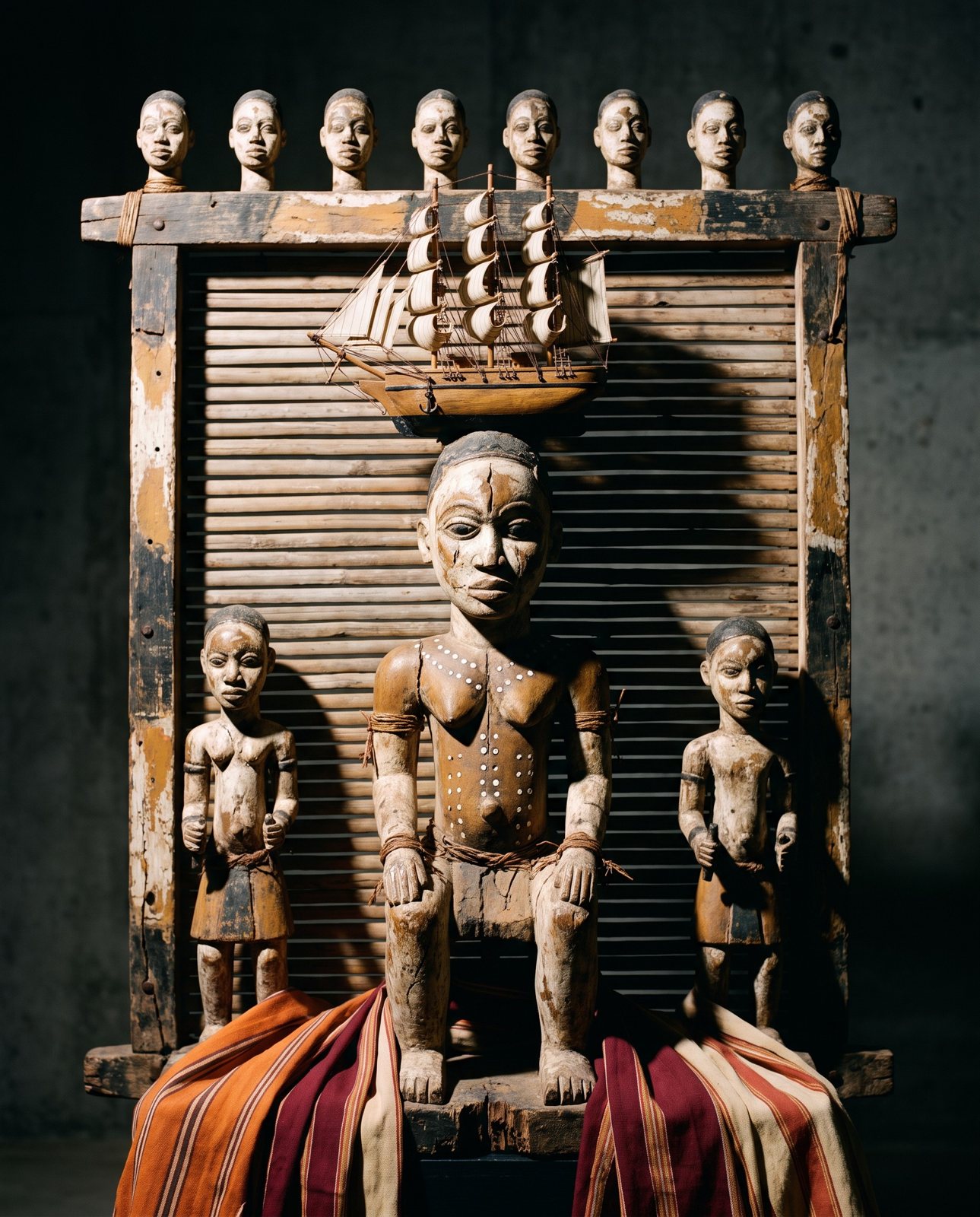
The ship screen, reconstructed
British Museum, London · Af1950,45.334
Reconstruction of a 19th-century screen
Drawn from the documented iconography: a three-masted ship carved as a crown, a staff at the shoulder, heads pegged along the rail, striped cloth bunched over the legs. Not a photograph, and not exact in every detail.
AI reconstruction for IjawConnect from published photographs
 Reconstruction
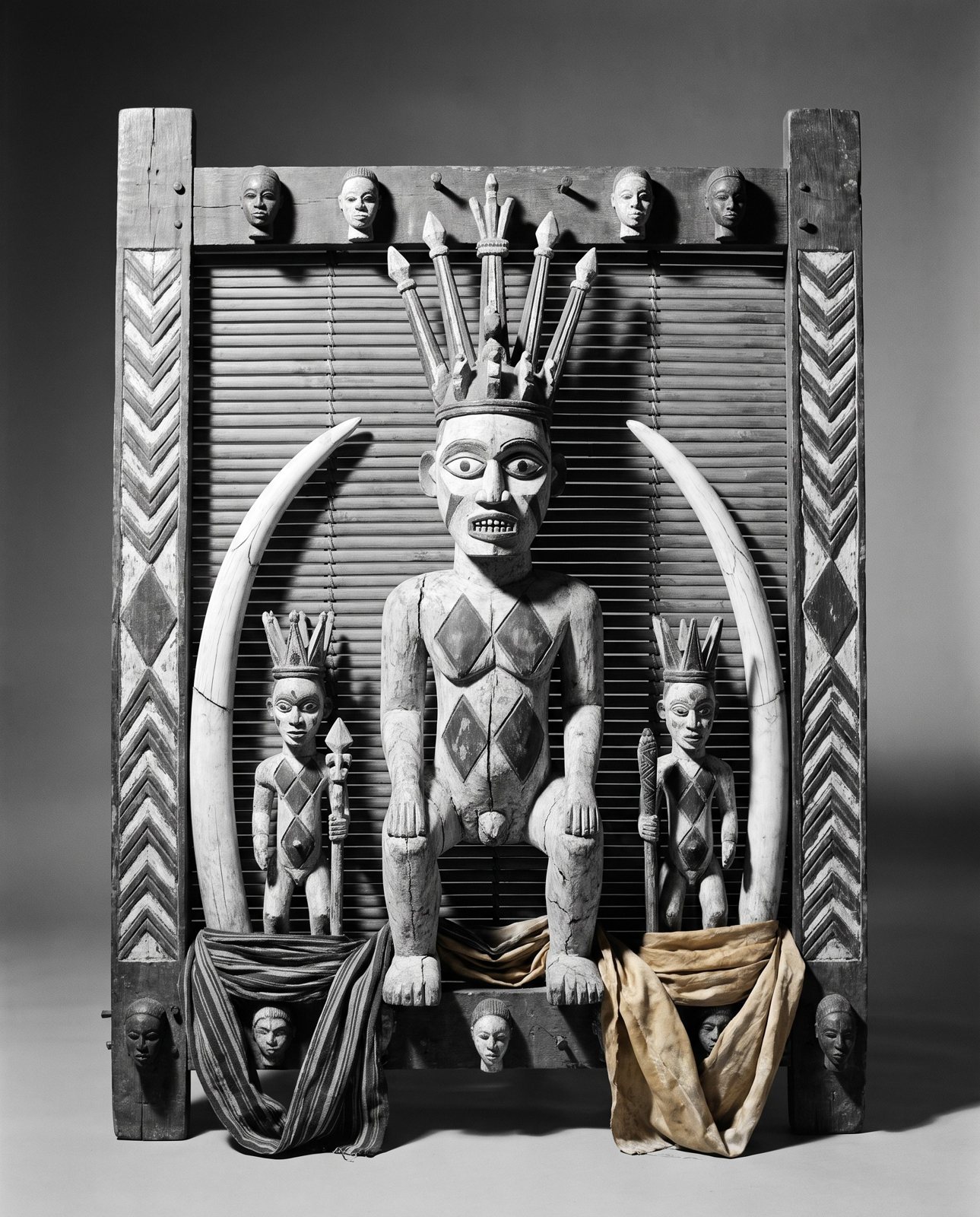
The crown-and-tusk screen, reconstructed
British Museum, London · Af1950,45.331
Reconstruction of a 19th-century screen
A pronged crown, two curving tusks, chevron-carved stiles and bodies painted in diamond lozenges. Not a photograph, and not exact in every detail.
AI reconstruction for IjawConnect from published photographs
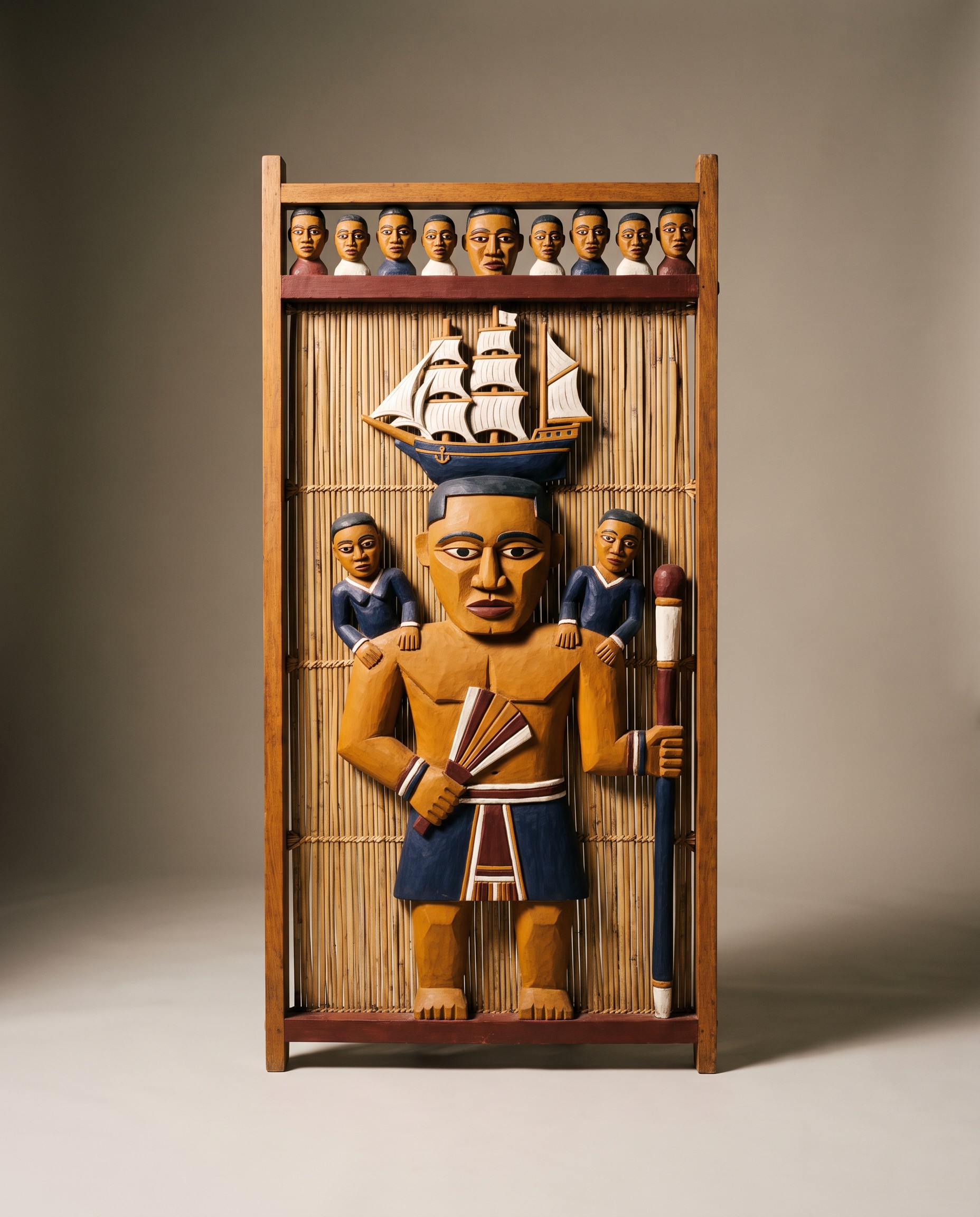 Original work
A bekinarusibi screen, as if newly carved
Made for this article, No museum holds this screen
2026 · Original digital work in the Kalabari idiom
Not a copy of any surviving screen and not attached to any accession — an original work in the tradition, built from what the record documents about how these screens are made. A rectangular frame over a split-cane backing; separately carved figures pegged flat onto it rather than carved in the round; the house head frontal and outsized with the deliberately unindividuated face; two supporters at his shoulders; a rail of small heads counting his dependents; fan and staff. The headdress is bekinarusibi, the white man’s ship. Museum screens have faded through a century of light; this shows the vivid repainted surface they were kept in while they were still being dressed and renewed.
IjawConnect
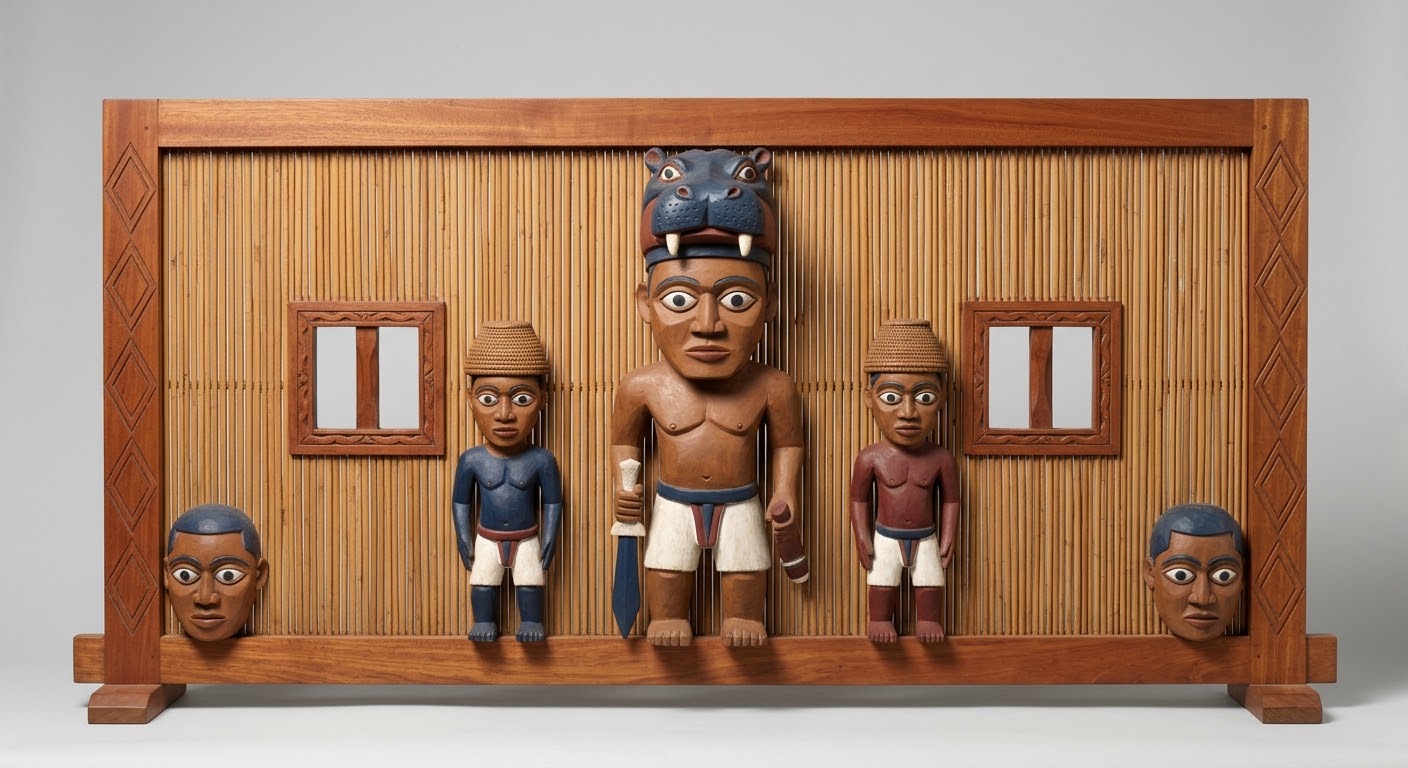 Original work
An otobo screen, as if newly carved
Made for this article, No museum holds this screen
2026 · Original digital work in the Kalabari idiom
The same original screen with a different headdress: otobo, the hippopotamus, one of the great water-spirit masquerades of the Ekine society. The house head’s own face stays uncovered beneath it, as it never was in performance — that is the whole convention of these screens, which show the man and the spirit he held rights to at once. The hippo mask is documented on surviving screens; this particular carving of it is ours, and stands for no object in any collection.
IjawConnect
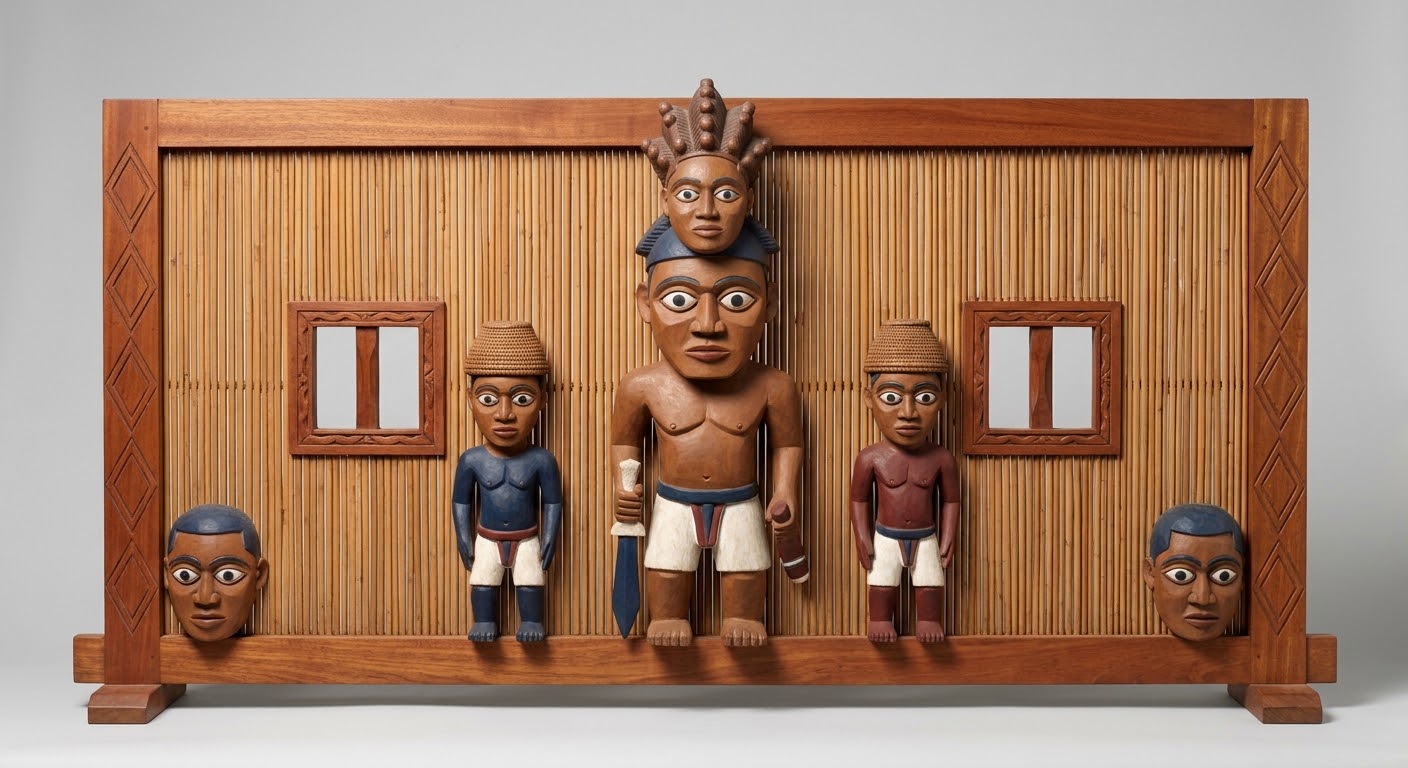 Original work
An alagba screen, as if newly carved
Made for this article, No museum holds this screen
2026 · Original digital work in the Kalabari idiom
Alagba is named on surviving screens and described in Kalabari sources as a female water spirit whose masquerade belongs to a particular group of the town. What her headdress actually looked like we could not establish from anything we were able to check. The crested female face shown here is our inference from the general convention — a female spirit carried as a smaller face above the man’s own — not a recorded form. Treat the name as documented and the carving as invention.
IjawConnect
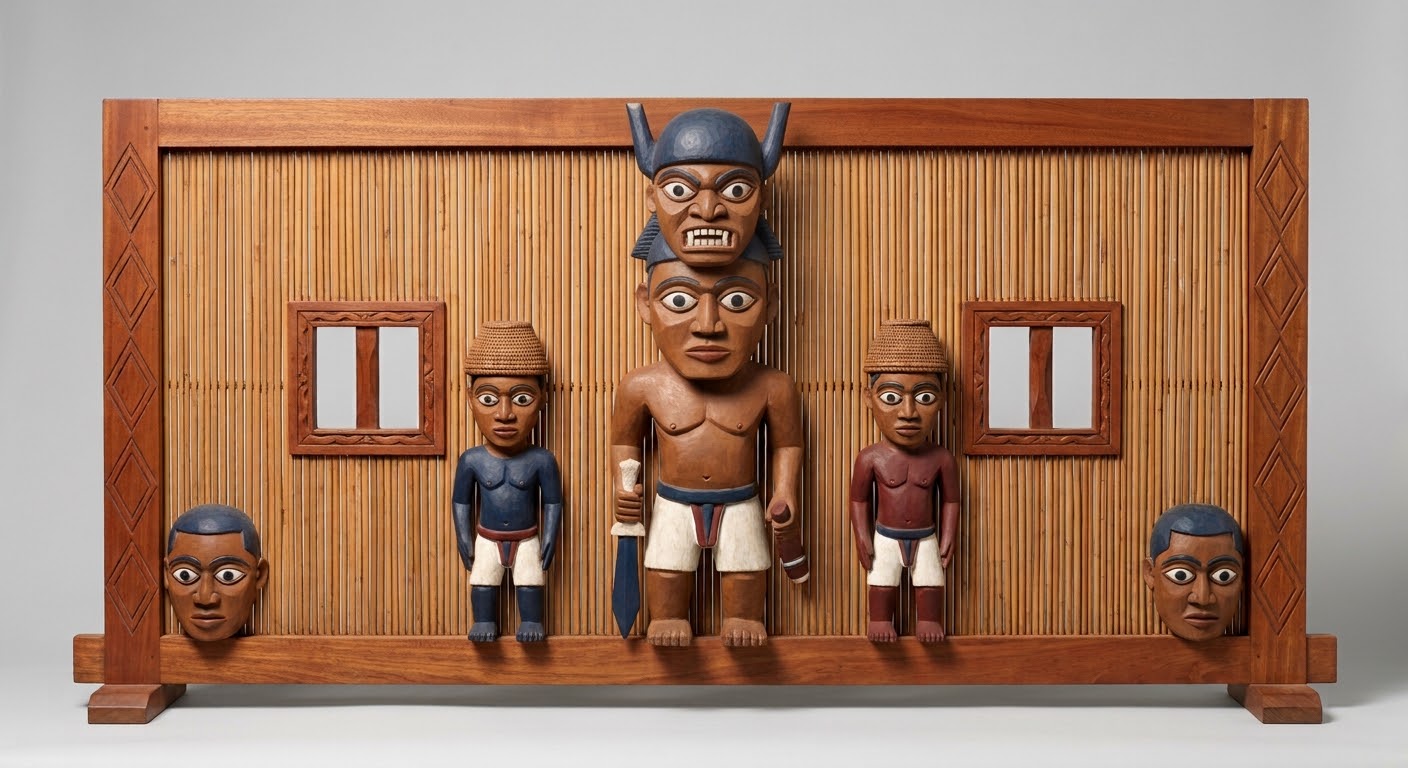 Original work
An ngbula screen, as if newly carved
Made for this article, No museum holds this screen
2026 · Original digital work in the Kalabari idiom
Ngbula, the doctor of the water people, the healing spirit invoked against disease and epidemic. The masquerade is documented and its mask is described as formidable; the specific face carved here — domed brow, bared teeth, upswept horns — is ours, not a record of any surviving headdress. As with alagba: the name is attested, the carving is not.
IjawConnect
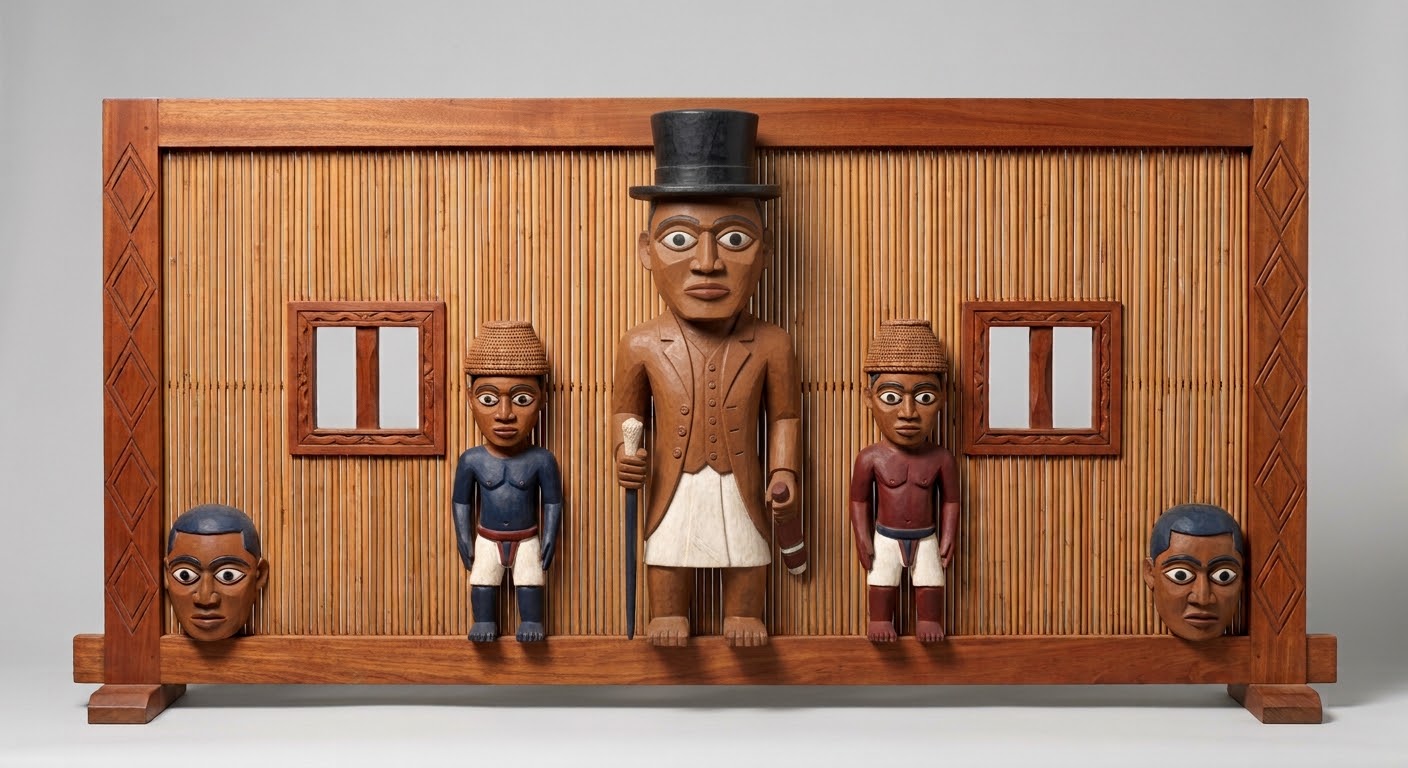 Original work
A top-hat screen, as if newly carved
Made for this article, No museum holds this screen
2026 · Original digital work in the Kalabari idiom
No masquerade at all. Some house heads are commemorated not in a water-spirit headdress but in a European top hat and frock coat with a walking stick — articles the Art Institute of Chicago describes as tightly restricted signs of wealth and power. The same man might have been shown either way, and the choice told the house something about him. The attendants keep their basketry caps; only the centre has changed.
IjawConnect
No image we are free to publish yet
See it on the museum's own siteAncestor Memorial Screen
New Orleans Museum of Art, New Orleans · 97.160
Late 19th to early 20th century · Wood, wicker, pigment
Made at Abonnema and attributed to the Pokia family of Ifoko. A radiating comb headdress over white disc eyes, and a painted white zigzag border. We found no freely licensed photograph of this screen, and the museum reserves rights in its own images, so we link to it rather than reproduce it.
Museum purchase, George S. Frierson, Jr. Fund
No image we are free to publish yet
See it on the museum's own siteDuein fubara (ancestral screen)
Fine Arts Museums of San Francisco, San Francisco · 2005.23a-d
Attributed to the Pokia family, about 1890 to 1920
A tall openwork cone rises from the head between two cup-shaped finials, over a border painted in blue-violet. We found no freely licensed photograph of this screen, and the museum's collection pages are closed to automated access, so we link to it rather than reproduce it.
Foundation purchase, Phyllis C. Wattis Fund for Major Accessions
No image we are free to publish yet
See it on the museum's own siteAncestral Screen
Detroit Institute of Arts, Detroit · 2003.21
Late 19th century · Iroko wood, earth pigments, plant fibres, metal
We found no freely licensed photograph of this screen, and the museum reserves rights in its own images. Rather than invent an approximation and label it with a real accession number, the card links to the museum's record.
Detroit Institute of Arts, Museum Purchase, Robert H. Tannahill Foundation Fund
No image we are free to publish yet
See it on the museum's own siteFunerary Screen (Duen Fobara), fragment
Yale University Art Gallery, New Haven · 2006.51.336
19th to 20th century
Yale marks its image of this fragment “Copyright Undetermined” rather than public domain, so we do not mirror it here. The gallery’s own IIIF viewer shows it in full.
Charles B. Benenson, B.A. 1933, Collection
No image we are free to publish yet
Two screens from the Talbot group
Pitt Rivers Museum, Oxford
Collected 1916
Part of the group P. Amaury Talbot collected before 1916. The British Museum licenses its images of the companion screens CC BY-NC-SA, which this non-commercial site can use, but the Museum blocks automated access, so we have not been able to retrieve them. Follow the link for the museum’s record.
Pitt Rivers Museum, University of Oxford
Entrusted, or taken?
The screens are not the Benin Bronzes. The Museum says so, and the critics say that is exactly the problem.
- 1
At the request of Kalabari chiefs in 1916 the screens were placed under Talbot's protection to save them from the Braide movement's iconoclasm.
- 2
Unlike the Benin objects, they were not seized in a military expedition.
- 3
Ancestral shrines are still commissioned and honoured by Kalabari people; the tradition was not extinguished.
No duein-fubara-specific repatriation request has been publicly documented
Nigeria's National Commission for Museums and Monuments has concentrated on Benin, Ife, Nok and Igbo-Ukwu material.
One screen has been returned
By the Museum of Fine Arts, Boston in June 2014, on grounds of forged export papers; not a Talbot screen.
Digital return is available now
The Talbot screens are photographed in the British Museum's online collection, and the bekinarusibi screen is mirrored on Google Arts & Culture. Annotation by Kalabari houses is the obvious next step.
There is a real tension here and this article does not resolve it. The transfer may well have been consensual in the narrow sense, and it may well have saved the screens from Braide's fires. It also took place inside a colonial order the Kalabari had not chosen, and it removed the screens from Nigeria rather than safeguarding them at Degema. Barley's account of the botched reassembly complicates any tidy story of protective stewardship. The only documented return, Boston's in 2014, concerned a screen smuggled out in the twentieth century, not Talbot's.
What is achievable now is digital. The Talbot screens are photographed in the British Museum's online collection, and the bekinarusibi screen is mirrored on Google Arts and Culture. Bringing them visually home, annotating them with Kalabari knowledge and correcting museum records with the expertise of the houses that made them is work a platform like this one can begin without asking anyone's permission. No 3D-scanning or Digital Benin initiative exists for the Kalabari screens. That gap is an invitation.
The claims ledger
What is documented, what is Kalabari tradition, and what circulates online without a source we could find.
Duein fubara means 'forehead(s) of the dead'
Museum records, Barley and Horton agree.
The forehead is the seat of so, a person's destiny
Smithsonian National Museum of African Art object text; Horton on Kalabari personhood.
The screens were built with knowledge of European ship carpentry and modelled on framed portraits and photographs
Barley's interpretation, widely repeated by museums — the Art Institute of Chicago states flatly that its screen was “constructed using the joinery methods of ship carpenters”, while hedging the other half to screens that “may have been inspired by early portrait photographs”. That hedge is the right one: it is an argument from form, not a documented workshop history.
Screens commemorate men who had themselves been enslaved
The Art Institute of Chicago puts it plainly: when British trade policy upended the delta’s structure of royal descent, it “opened the door for liberated slaves in the area to establish themselves as merchants”, some rising to preside over canoe houses. A screen is therefore not only a memorial to a great man but, in some cases, the record of a spectacular ascent — from captive to house head, commemorated in the idiom reserved for kings.
The house head shown on a screen is the amanyanabo
The Art Institute captions its central figure amanyanabo, plural amanyana-pu, glossed “owners of the land” or “kings”. The ethnographic literature is narrower: the amanyanabo rules a town and sits above the house heads, who are alabo (plural alapu) among the Kalabari and wari-dabo at Nembe. Both usages are in print; the museum’s is the looser one.
The Pokia family of Ifoko carved the best screens
Kalabari tradition recorded by Barley; museums say only 'a lineage of artists in the eastern Niger Delta'.
The carver waited for a dream visit from the dead man
Recorded by Barley from Kalabari informants.
Talbot gave nine screens to the British Museum and two to the Pitt Rivers
British Museum 'Collecting and empire' text.
The chiefs asked Talbot to take the screens
The standard account, stated by the Museum; no independent Kalabari record of the request has been published, and critics question what consent meant in 1916.
The screens were reassembled wrongly in London
Barley, quoted in the Museum's own curatorial notes, from photographs taken at Degema before packing.
Every screen for a smallpox death was forbidden; screens were carved in secret at 'Fouché'; the inner shrine was called 'Ikpu'
These details circulate online without a traceable source. We could not verify them and do not use them.
The screens were made of odumdum wood
Asserted on some websites; museum records give only 'wood', cane, pigment and fibre.
Ancestral shrines are still commissioned
British Museum text. New carved screens, as opposed to shrines and photographs, are not documented in this century.
Amachree I was the first man commemorated by a screen
The British Museum says so; Alagoa's dates for Amachree I (1669–1757) are far earlier than any surviving screen.
Offerings were made on an eight-day cycle
Repeated online; not found in Talbot or in any museum record we could reach.
One screen was returned to Nigeria in 2014
Museum of Fine Arts, Boston press release, 26 June 2014.
Glossary
Kalabari terms used on this page. Each screen is a small dictionary of the Kalabari theory of the person.
The dead; the ancestors.
Forehead; the seat of so.
Destiny, chosen before birth.
The spirit that chooses and survives.
Founding heroes and village spirits.
Water spirits, danced by Ekine.
The masquerade society, 'the dancing people'.
Canoe house; a trading and fighting corporation.
King; 'owner of the town'.
The ancestral altar before the screen (Talbot).
'White man's ship on head' masquerade.
The hippopotamus masquerade.
The old city, 'New Calabar' to Europeans.
Kalabari cut-thread cloth, an heirloom textile.
- 1.Barley, N. (1988). Foreheads of the Dead: An Anthropological View of Kalabari Ancestral Screens. Smithsonian Institution Press.
- 2.Horton, R. (1962). The Kalabari World-View: An Outline and Interpretation. Africa 32(3).
- 3.Horton, R. (1963). The Kalabari Ekine Society: A Borderland of Religion and Art. Africa 33(2).
- 4.British Museum. Collecting and empire trail (large-print guide) and object records Af1950,45.331–348.
- 5.Smithsonian National Museum of African Art. Kalabari Ancestral Screens: Levels of Meaning (1988–89), catalogue by P. L. Ravenhill and R. A. Walker.
- 6.British Museum. Object record Af1950,45.334, funerary screen (duein fubara), bekinarusibi.
- 7.British Museum (2024). Collecting and empire, large-print guide.
- 8.Art Institute of Chicago. Figure Screen (Duein Fubara), object record 2005.154.
- 9.New Orleans Museum of Art. Ancestor Memorial Screen (duein fubara), 97.160.
- 10.Fine Arts Museums of San Francisco. Duein fubara (ancestral screen).
- 11.Detroit Institute of Arts. Ancestral Screen, 2003.21.
- 12.Smithsonian National Museum of African Art. Duein fubara object text (Resonance).
- 13.Barley, N. (1987). Pop Art in Africa? The Kalabari Ijo Ancestral Screens. Art History 10(3).
- 14.Minneapolis Institute of Art. Ancestral Screen (Duen Fobara), 74.22.
- 15.Museum of Fine Arts, Boston (26 June 2014). Museum of Fine Arts, Boston, Transfers Eight Antiquities to Nigeria.
- 16.Talbot, P. A. (1932). Tribes of the Niger Delta: Their Religions and Customs. Sheldon Press.
- 17.Jones, G. I. (1963). The Trading States of the Oil Rivers. Oxford University Press.
- 18.Dictionary of African Christian Biography. Garrick Sokari Braide.
- 19.Ludwig, F. (1993). Elijah II: Radicalisation and Consolidation of the Garrick Braide Movement 1915–1918. Journal of Religion in Africa 23(4).
- 20.Daly, M. C. (1990). Androcentrism in 'Foreheads of the Dead'. African Arts 23(3).
- 21.Eicher, J. B. & Erekosima, T. V. (1987). Kalabari Funerals: Celebration and Display. African Arts 21(1).
- 22.Anderson, M. G. & Peek, P. M. (eds.) (2002). Ways of the Rivers: Arts and Environment of the Niger Delta. UCLA Fowler Museum.
- 23.Iyer, A. (2020). The British Museum's Collecting and Empire trail. Hyperallergic.
- 24.Jones, A. (2020). On the Collecting and Empire trail at the British Museum. Apollo.
- 25.IjawConnect. Egbesu: The Law of the Leopard (companion article).
About this article. Researched and written by the IjawConnect Editorial Board with two independent fact-checking passes against museum records and published scholarship. The images are AI-generated interpretive plates and are not photographs of any museum screen; the real screens can be seen in the collection records linked above. Where a claim rests on Kalabari oral tradition it is labelled as such; where a widely repeated detail could not be traced to a source, we say so rather than repeat it. Corrections from Kalabari houses, custodians and scholars are welcome through the IjawConnect submission page.