The Blacky & Danger Masquerade
Traditional Owu cosmologies of the Okrika (Wakirike) people — between the water spirits, the Sekiapu society, and the digital age of preservation.
The metaphysical and physical dimensions of Ijaw masquerades
The traditional cosmology of the Ijaw people of the Niger Delta is structured around a dual reality: the physical domain of human activity and the metaphysical realm of the Owuamapu — the water spirits. Within this belief system, the riverine networks and mangrove swamps of the delta are not merely geographic features but sacred, living spaces populated by powerful spiritual entities.
Ijaw spiritual traditions assert that human souls reside among these aquatic deities in the water world before physical birth, establishing an unbreakable ontological link between the human community and the water spirits.
The primary institutional mechanism for mediating this relationship is the Sekiapu society (historically referred to as the Ekine society). This prestigious men's association is dedicated to masquerade performances that represent the water spirits — not as theatrical entertainment, but as physical personifications of the deities themselves. Those who perform with exceptional skill and intensity are believed to be temporarily possessed by the specific water spirit they represent.
The river as auditorium
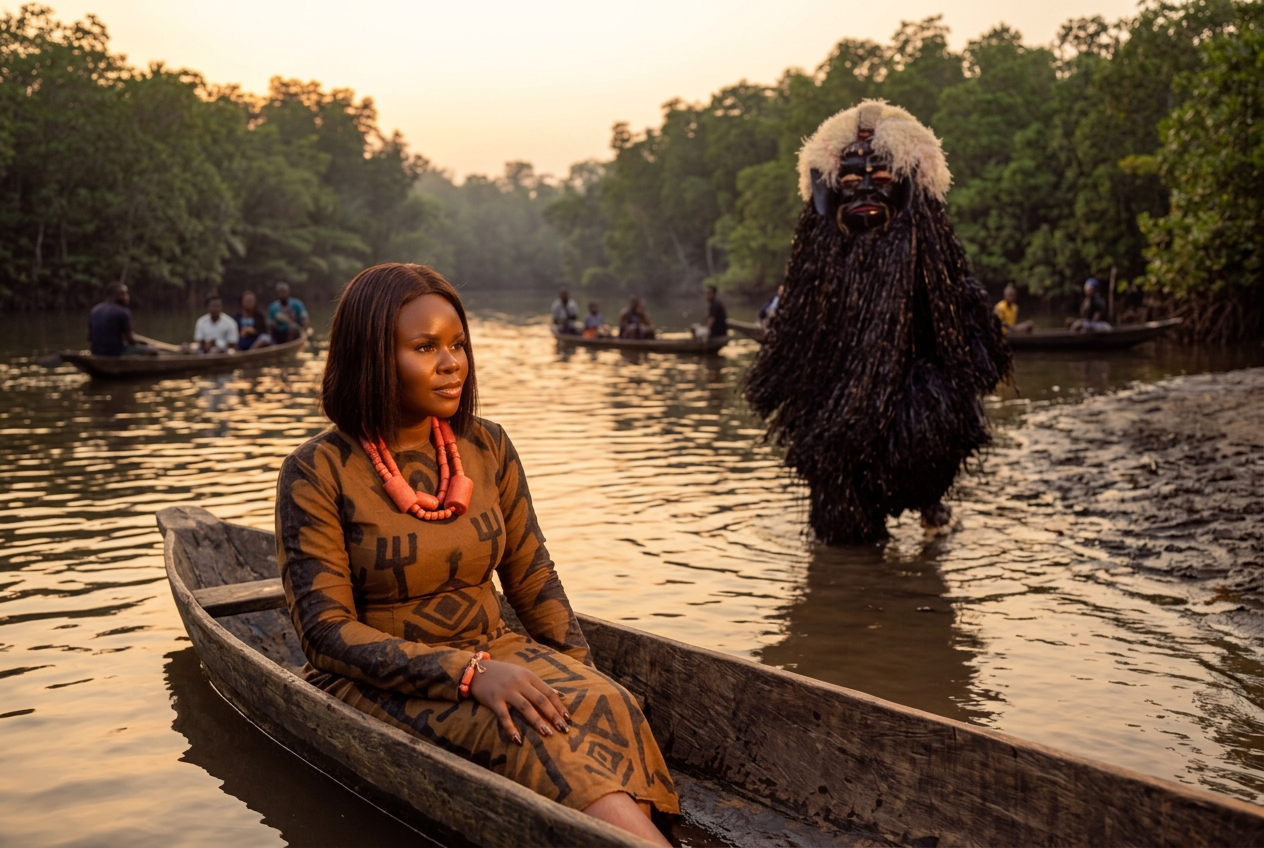
Historically, the river itself served as the primary performance arena. Audiences gathered in hand-carved canoes, transforming the water into a floating, mobile auditorium that followed the masquerades as they moved from upstream to downstream.
This aquatic theatre reinforced the community's connection to their environment, merging artistic expression, physical endurance and religious devotion into a single continuous act of witness.
Reading the Blacky masquerade
In the Wakirike (Okrika) dialect, Owu translates directly as "masquerade." Among the Owu plays celebrated by the Okrika, Blacky & Danger stands out as a highly dynamic, contemporary performance that bridges ancient spiritual belief with modern community celebration.
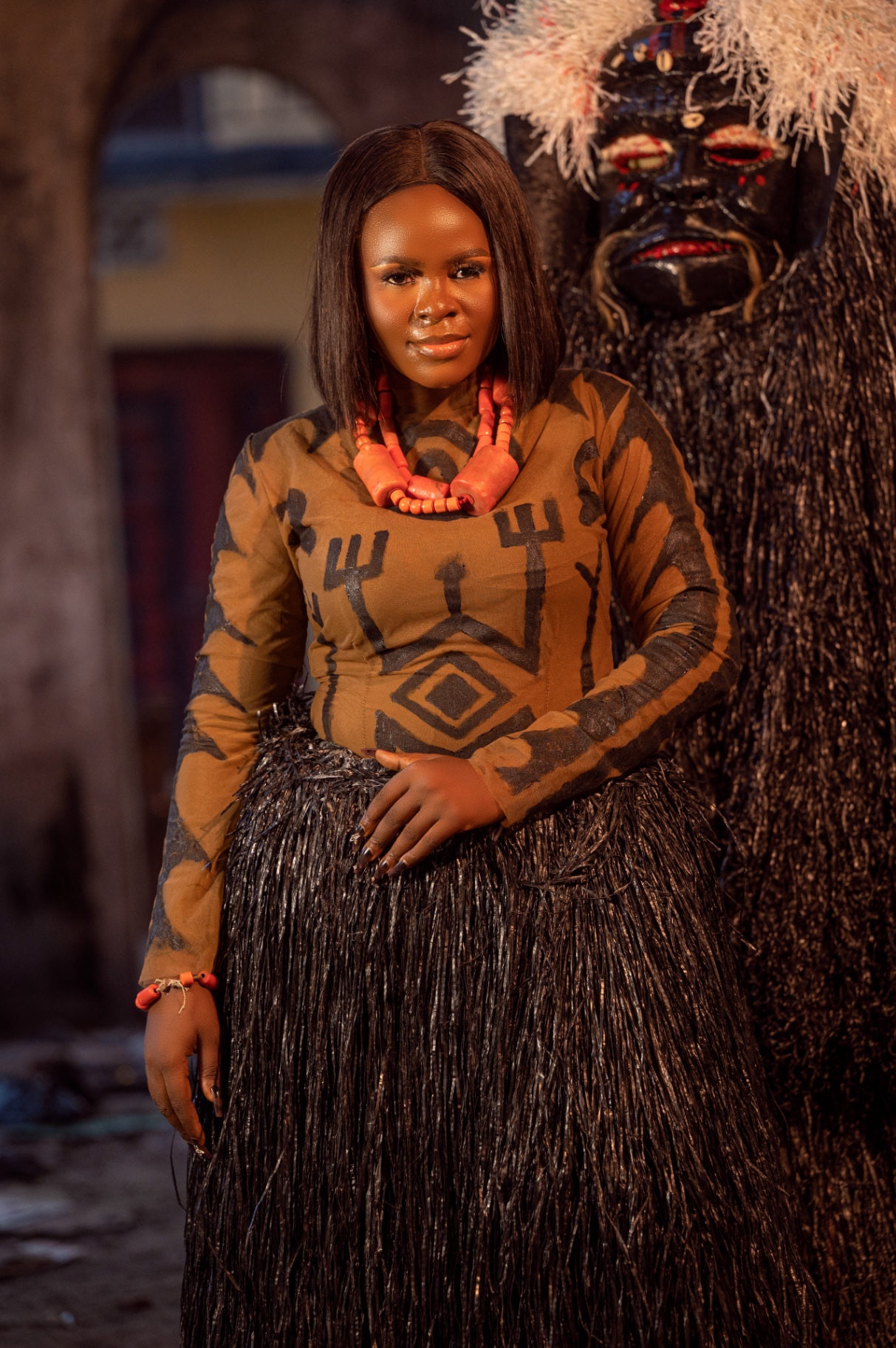
The visual form is a study in Niger Delta aesthetics: the spirit is draped in an extensive, dense coat of dark, coarse raffia fibres that completely mask the human form, creating a bulky, towering silhouette. The carved wooden headpiece, positioned atop this fibre column, features a blackened face with wide, stark white eye markings, deep crimson paint on lips and orbital ridges, and a crown of white and red tufted fibres.
The black, red and white colour scheme is deeply symbolic: the mysterious depths of the river (black), the volatile power of the spirits (red), and the purity or spiritual clarity of the ritual state (white).
In performance, Blacky and Danger work in tandem, displaying contrasting temperaments that mirror the unpredictable, dual nature of the water spirits: life-giving and calm, yet potentially hazardous and destructive. In Okuru-ama and other Okrika communities, these plays are driven by rapid percussion, traditional Ijaw drumming, custom chants and call-and-response vocalisations.
Itun — the coral of nobility
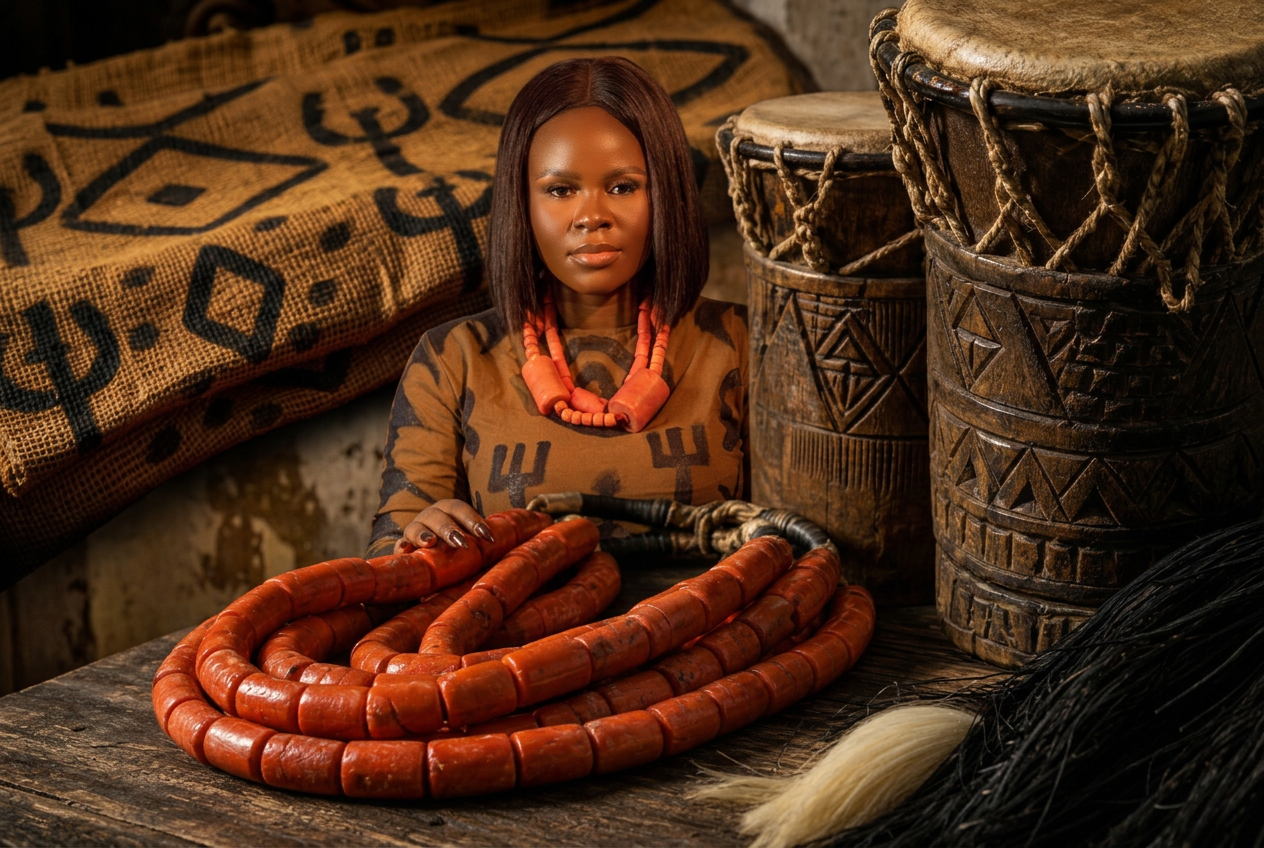
A substantial collar of traditional red cylindrical coral beads — known locally as itun — signifies high social status, nobility and cultural authority in the Niger Delta. Worn alongside geometric body-painting patterns that echo riverine iconography, it marks the wearer as a conscious mediator of the culture rather than a passive witness.
The spin — raffia in motion
Two documentary clips from grassroots archivist Florence Samuel, filmed at Okrika street performances. The whirling raffia column, the drum ensemble and the close-contact crowd work together to define the Blacky & Danger play.
Blacky in full spin
The raffia column at full velocity — the signature entrance of the Blacky masquerade, captured on an Okuru-ama street.
Footage · Florence Samuel
Crowd-side, close contact
Close-contact street interaction with the drum ensemble driving the tempo — the moment where sacred play becomes public celebration.
Footage · Florence Samuel
Composite studies of the Blacky & Danger regalia
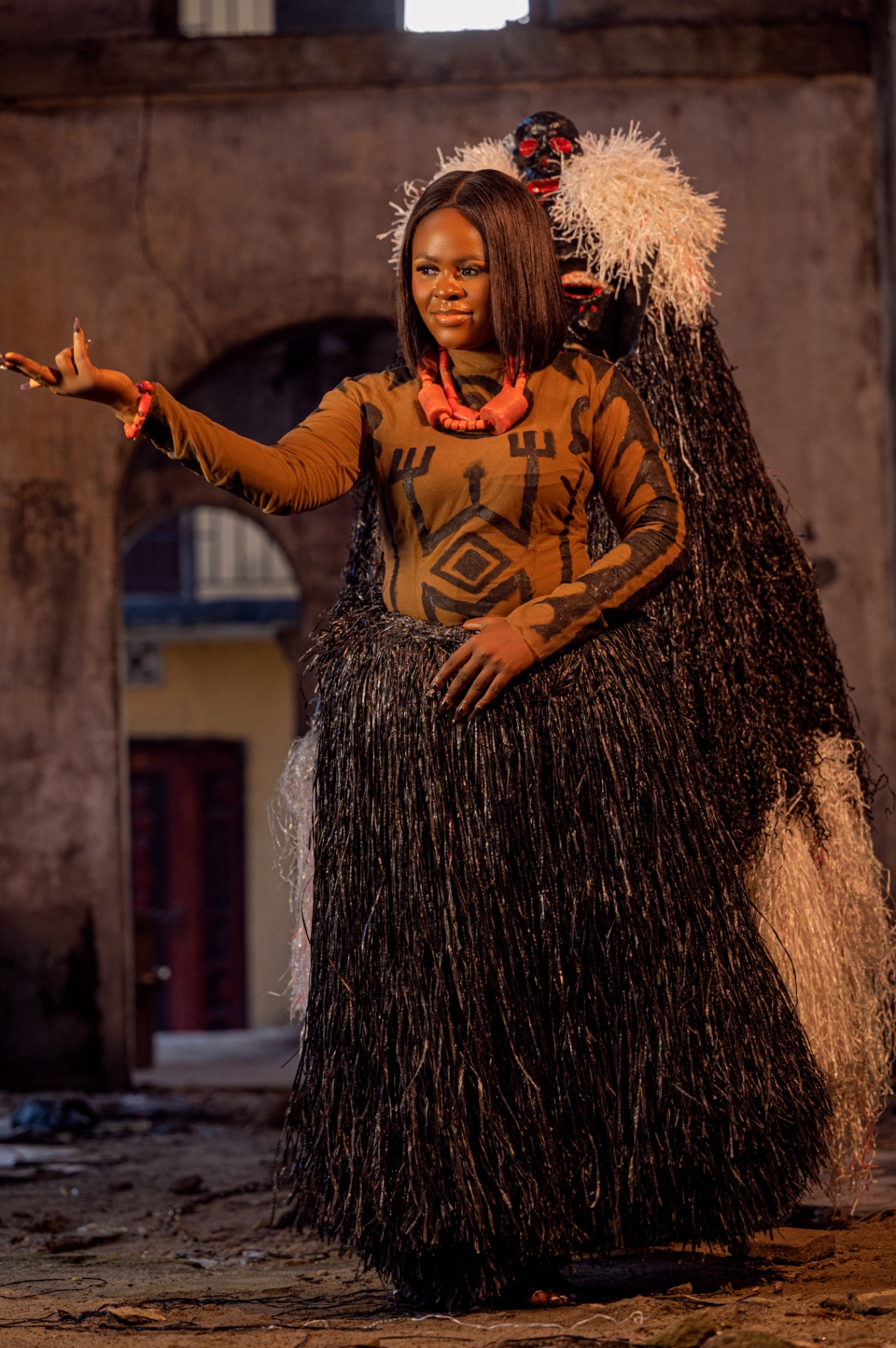
Where community footage does not yet exist, we commission research-guided visual plates — modelled directly on Florence Samuel's documentary portraits, Sekiapu costume references and published Niger Delta ethnography. Each plate isolates a facet of the masquerade: full regalia, mask & crown, aquatic theatre, and the itun coral & drum ensemble.
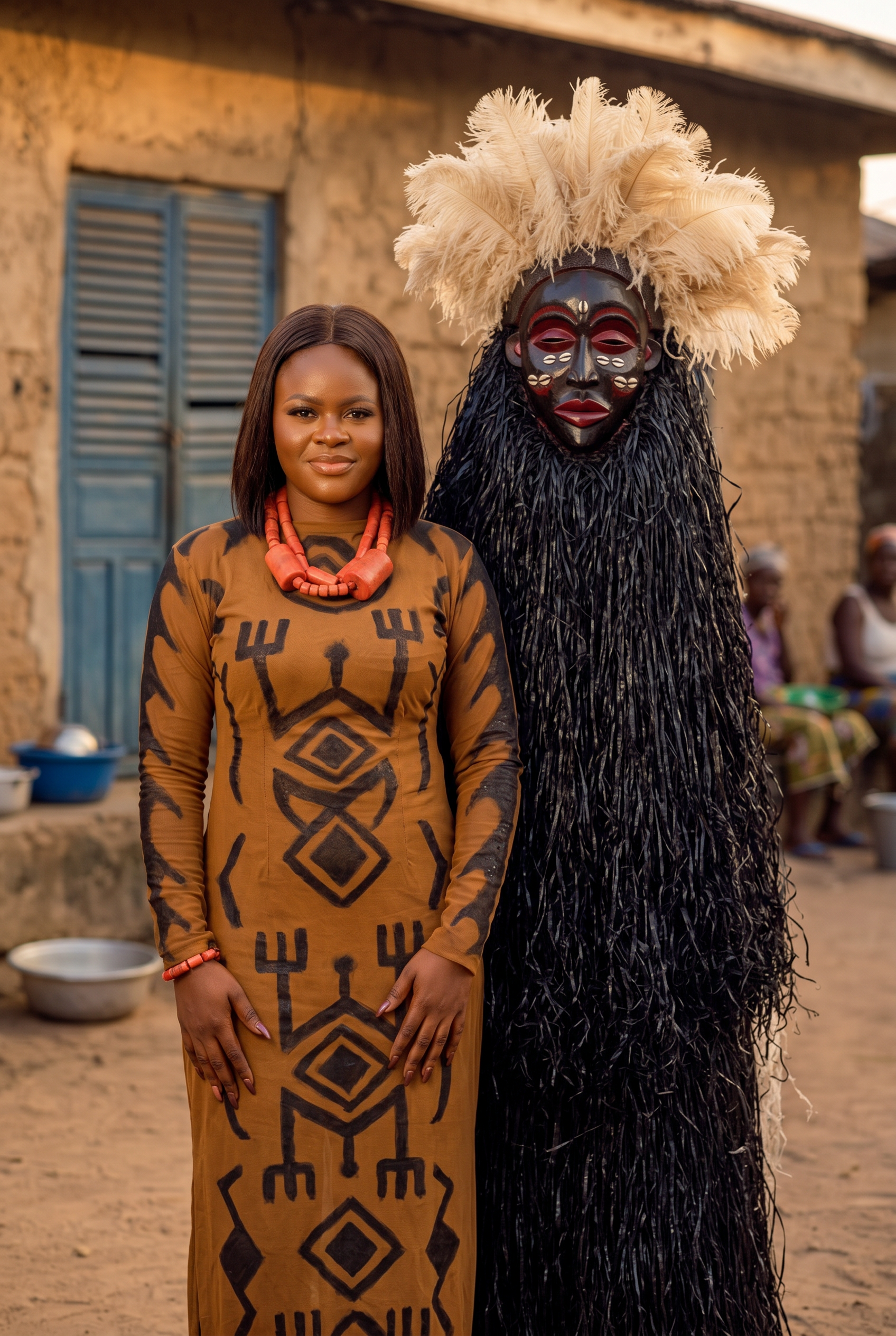
Research Plate
Blacky — full regalia study
Sources: Florence Samuel's field portraits of the Blacky play · Sekiapu (Wakirike) costume references · published Niger Delta masquerade ethnography (Horton, Anderson & Peek).
Reconstructed: Carved matte-black face mask with crimson lips · shaggy pale feather-tuft crown · floor-length dense raffia column · ochre body-paint tunic with Ijaw diamond and forked-trident motifs.
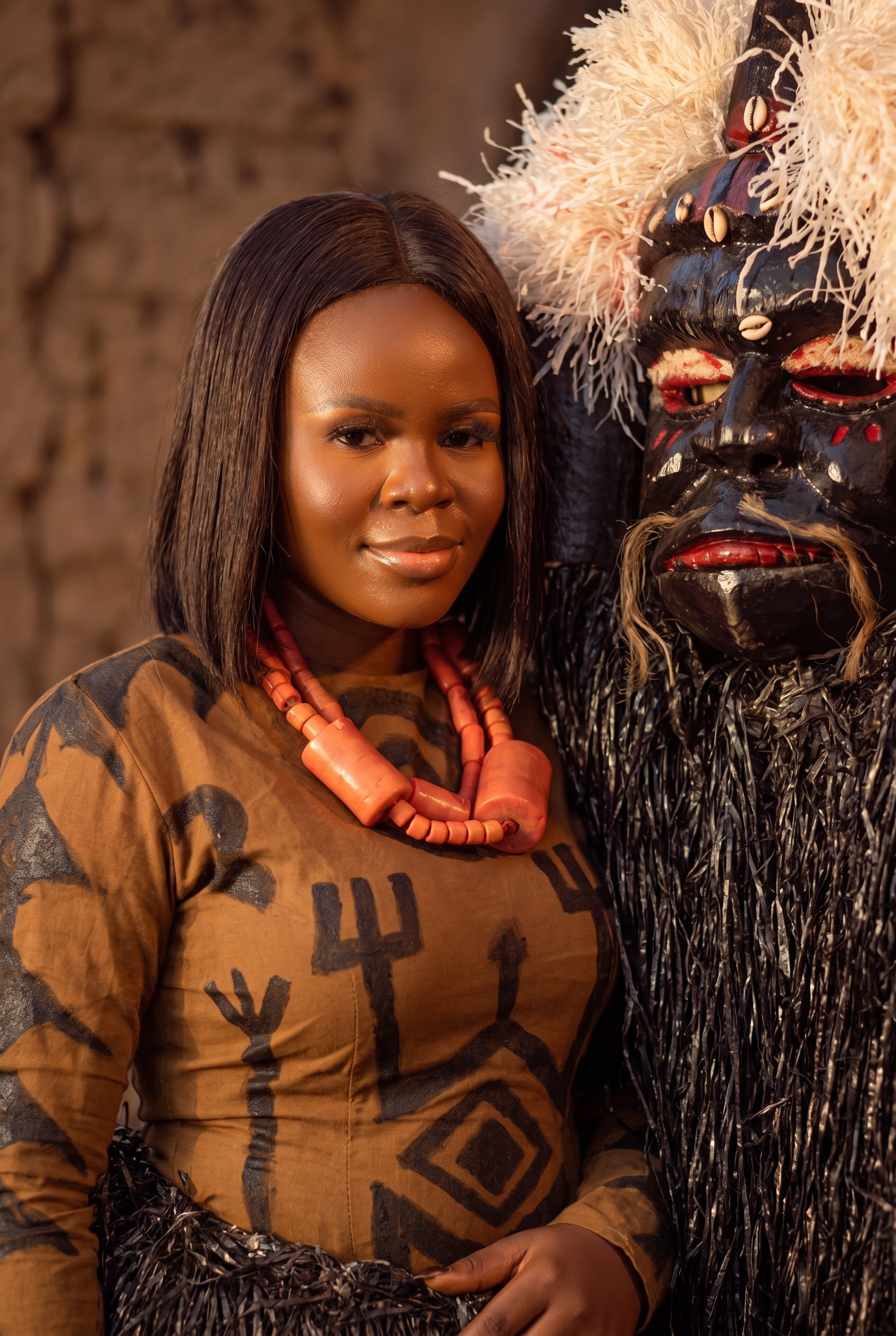
Research Plate
Mask & crown — close reading
Sources: Close-cropped frames from Florence Samuel's documentation · comparative Okrika and Kalabari mask typologies in Niger Delta ethnographic literature.
Reconstructed: Wooden mask with crimson orbital ridges and cowrie-white eye markings · the cream feather-tuft crown that identifies the Blacky spirit · raffia attachment at the mask's base.
Research Plate
The aquatic theatre
Sources: Florence Samuel's likeness from her field portraits · oral accounts of Owu water-borne performance · documented riverine staging of Wakirike masquerade plays.
Reconstructed: Canoe-borne audiences following an Owu play along a mangrove bank at dusk · the Blacky masquerade performing mid-river · Florence Samuel in-frame as documentation anchor.
Research Plate
Itun coral & Ijaw drums
Sources: Florence Samuel's likeness and regalia from her field portraits · ethnographic records of itun coral regalia among Ijaw nobility · carved drum typology of the eastern Niger Delta.
Reconstructed: Florence in her ochre motif tunic with a collar of cylindrical itun coral beads · coiled strands of coral · carved Ijaw drums and horsetail whisk in the foreground.
Art, photography, and the question of sacrilege
Some traditionalists have questioned whether posing with sacred masquerade regalia in stylised, public photography sessions is sacrilegious or violates the historic secrecy of the Sekiapu society. Historically, only initiated men were permitted to handle the masks; their identities were kept strictly secret to preserve the illusion of spirit personification.
Community leaders and cultural scholars — such as Dr. Sam Ogan — have defended these creative collaborations. They argue that the artistic adaptation of the Blacky masquerade costume for photoshoots is not sacrilegious but represents a vital, modern medium of documentation. In an era where traditional knowledge is rapidly eroding under urbanisation, migration and religious shifts, such projects serve as accessible archives that introduce the youth to their heritage.
Rather than diminishing the sacred, these projects demystify the culture — reframing the Owu tradition as an elite art form worthy of preservation and global appreciation. By placing modern, educated Ijaw women alongside the masquerade, the imagery also challenges the historical exclusion of women from masquerade spaces while celebrating the shared responsibility of cultural preservation.
Niger Delta masquerading traditions
How the Okrika Owu tradition sits alongside neighbouring riverine masquerade cultures.
Okrika (Wakirike) Ijaw
Sekiapu Society & Local Youth Guilds
Spiritual Entity
Owuamapu — including contemporary characters like Blacky & Danger
Aesthetic & Performance
High-tempo street gyrations, acrobatic footwork, close-contact crowd interaction, a blend of sacred and secular themes.
Kalabari Ijaw
Ekine / Sekiapu Society
Spiritual Entity
Bini Oru (Water Spirits)
Aesthetic & Performance
Skyward-facing carved wooden crests visible when the dancer bends forward; strict drum-pointing rituals; entrances tied to the water.
Nembe Ijaw
Nembe Sekiapu Masquerade Society
Spiritual Entity
Owuamapu & ancestral deities (Otoba, Okiringbo)
Aesthetic & Performance
Complex night rituals, daytime public plays, firepots (Okiringbo), zoomorphic masks representing sharks and hippopotamuses.
Riverine Igbo & Ekpeye
Owu Mmiri Cult & Local Mask Guilds
Spiritual Entity
Owu Mmiri (Water Spirits / Mami Wata) & ancestral archetypes
Aesthetic & Performance
Mermaid-like aesthetics, highly theatrical characters (Owu Anakani, Ogbumadube), moralising narratives.
How this archive lives on IjawConnect
The Wakirike Owu material is woven across four surfaces of the platform — each serving a distinct preservation objective.
Culture & Heritage
The Wakirike Owu Archive
Multimedia & Community Hub
Grassroots Archivist Spotlight
Clan Directory
Wakirike / Okrika Clan Portal (Okuru-ama & George-ama)
Forums & Public Square
Dialogue: Tradition vs. Modernity
Digital stewardship, cultural continuity
The Blacky & Danger play of the Wakirike Ijaw is a vibrant, evolving tradition that bridges ancestral belief with contemporary celebration. By pairing well-researched writing with community-sourced media, hosting constructive debate, and cross- linking the archive to the clans, the languages and the diaspora, IjawConnect keeps the Owu tradition understood, respected and preserved for generations to come.
Sources: Masks of the World — "Mask for the Ijaw Water Spirit"; International Journal of Humanities & Social Studies — "A Study of Aquatic Audience in Masquerade Festival Performance"; Mythlok — "Owu Mmiri: The Water Spirit"; community commentary from Dr. Sam Ogan.