Niger Delta red colobus
Piliocolobus epieni
Modern science met the epieni in 1993, during the wildlife inventory of the central delta led by the late C. B. Powell, when a man from the Ijaw community of Gbanraun produced the skin of a monkey that matched nothing on record. Local hunters said it was still common. Grubb and Powell described it in 1999 as a subspecies of the western red colobus, separated from its nearest relatives by a gap of some 1,200 kilometres and explained by a Pleistocene forest refuge in the delta. Vocal and genetic work by Nelson Ting placed it on its own branch of the red colobus tree, and in 2007 Colin Groves raised it to a full species. Its scientific name is the Ijaw name.
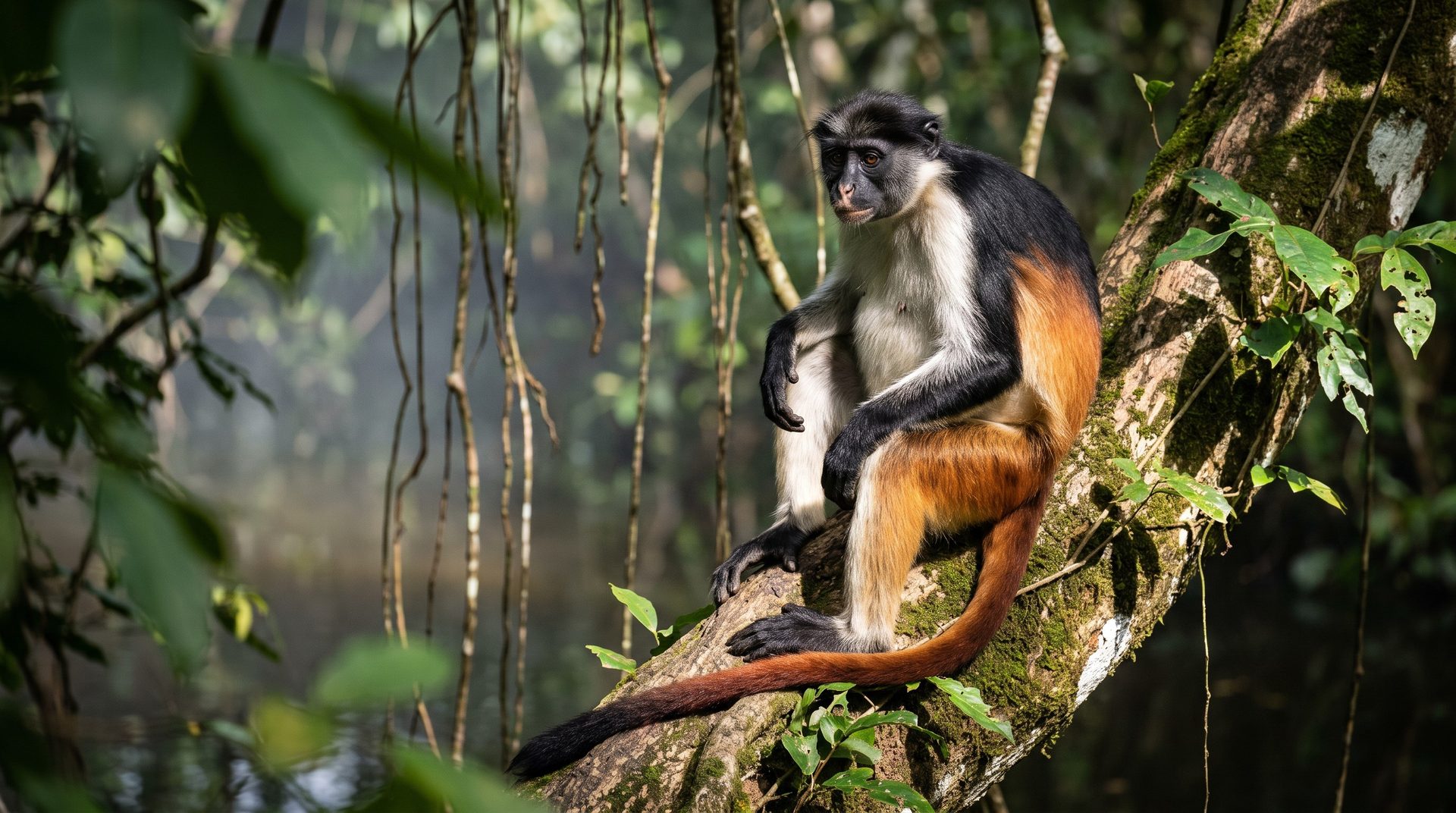
The animal is unmistakable. Black from the crown down the back to the rump, turning to orange-brown along the flanks and outer legs; white underparts, inner limbs and arms; black hands and feet with the thumb reduced to a stump; white cheeks and whiskers; black hair whorls over the ears; and a long tail, dark red-brown above and chestnut below, that darkens to black along its last third or more. A sacculated, multi-chambered stomach ferments cellulose, which makes the epieni a leaf-eater of the high canopy and ties it to abura, the tree loggers want most.
In 1996 Lodewijk Werre, who completed the only intensive field study of the species, estimated fewer than ten thousand animals across sixteen community forests. When Rachel Ikemeh surveyed the same forests in 2013 she found the monkey in only four of them, in the hundreds rather than the thousands, and confined to two clusters of degraded fragments totalling about 78 square kilometres. The Kolotoro cluster has since been logged to extinction. Fewer than five hundred survive, almost all around Apoi Creek. The IUCN has listed the species as Critically Endangered since 2008, and it sat on the list of the world's twenty-five most endangered primates in every edition from 2008 to 2025.
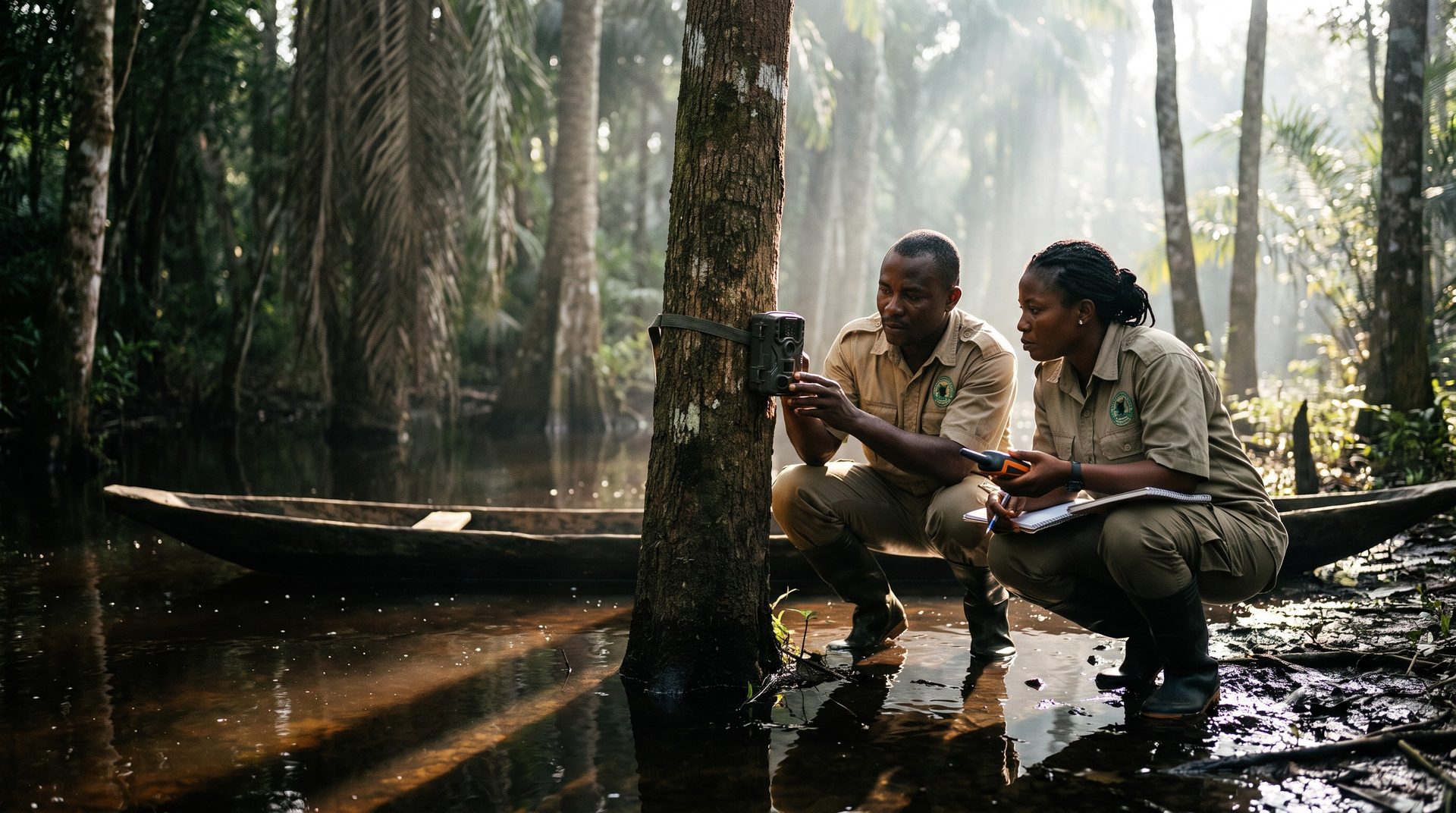
In July 2025 it was taken off that list. Not because the danger had passed, but because community protection at Apoi had produced the rarest thing in Niger Delta conservation: a population that had roughly doubled. The story of how is told below.
"We snatched it out of extinction in the nick of time." — Rachel Ikemeh, SW/Niger Delta Forest Project, 2025